
Kites, Comics, and Chaos: The Worlds of Arya Pandey
When you ask Arya Pandey where it all began, the answer is not a design school classroom or a studio, but comics. “I think I learned to read through comics,” Arya says, recalling shelves of Champak, Chacha Chaudhary, and endless Tintin volumes from a bookstore near his home in Lucknow. To Arya, plain words felt flat. Drawing followed naturally. He’d copy characters, scribble in his own stories, and rope his father into teaching him how to draw humans.
“I went to my father to teach me how to draw a human…and he drew what today I would say looks like a Roblox character. All blocky with bricks for hands and feet.”
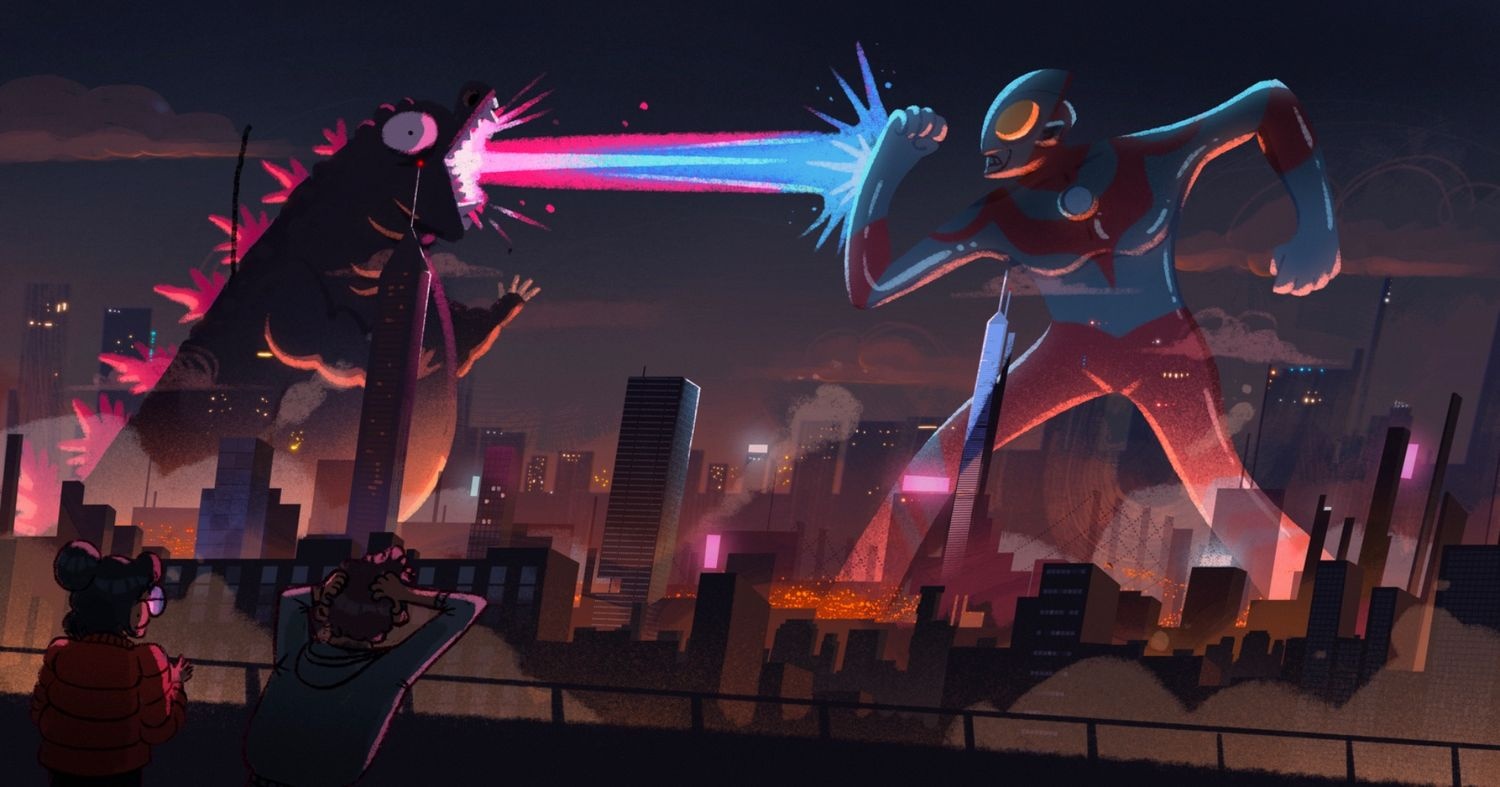
Those blocky sketches may have been tucked away in a storeroom, but the urge to draw never left him. He sketched during school exams, often for friends, proudly admitting, “I think they scored well!” Looking back, he gives his parents credit for letting him make a mess, literally and figuratively, while finding his voice.
Arriving at NID Haryana was a revelation. He says, “It stunned me to see the number of people who spoke my language.”
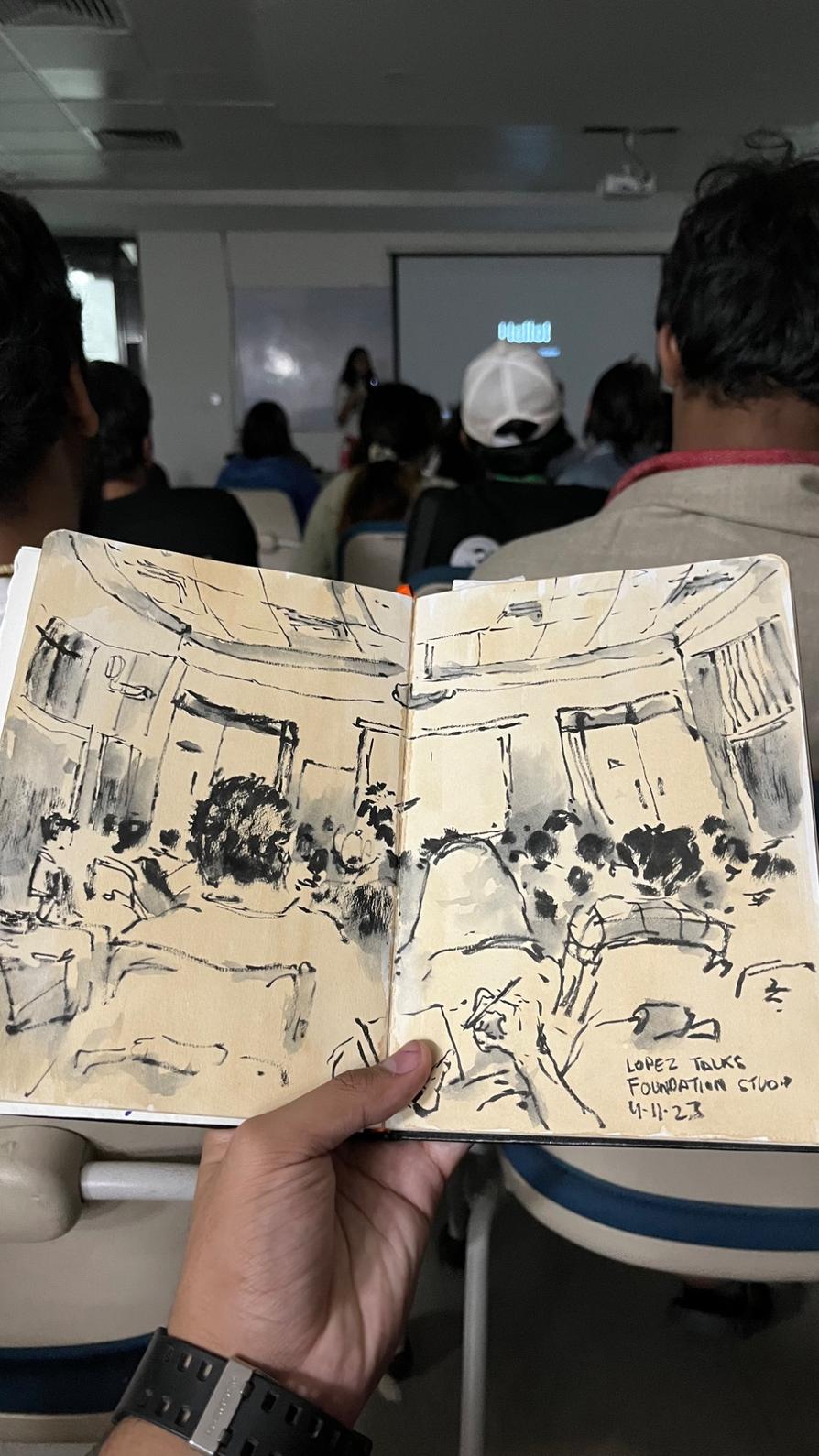
You’re the kid who’s been drawing at the back of his notebooks and then someone tells you there’s a place where they’d rather have those drawings in the beginning of the notebook, even better if it’s filled with them. And that those drawings can sometimes move
Here, Arya discovered not just mentors, but peers who inspired him with their unapologetic individuality. Exposure to diverse practices shaped him deeply, and friendships across the country made for what he calls “a co-learning experience I couldn’t have possibly fathomed.”
He’s set to graduate this year with Phaatak, a graphic novel anthology exploring stories from Lucknow.
“I’m super excited to finish it too! It has been quite the ride and I cannot promise there won’t be crying when I see my friends next.”
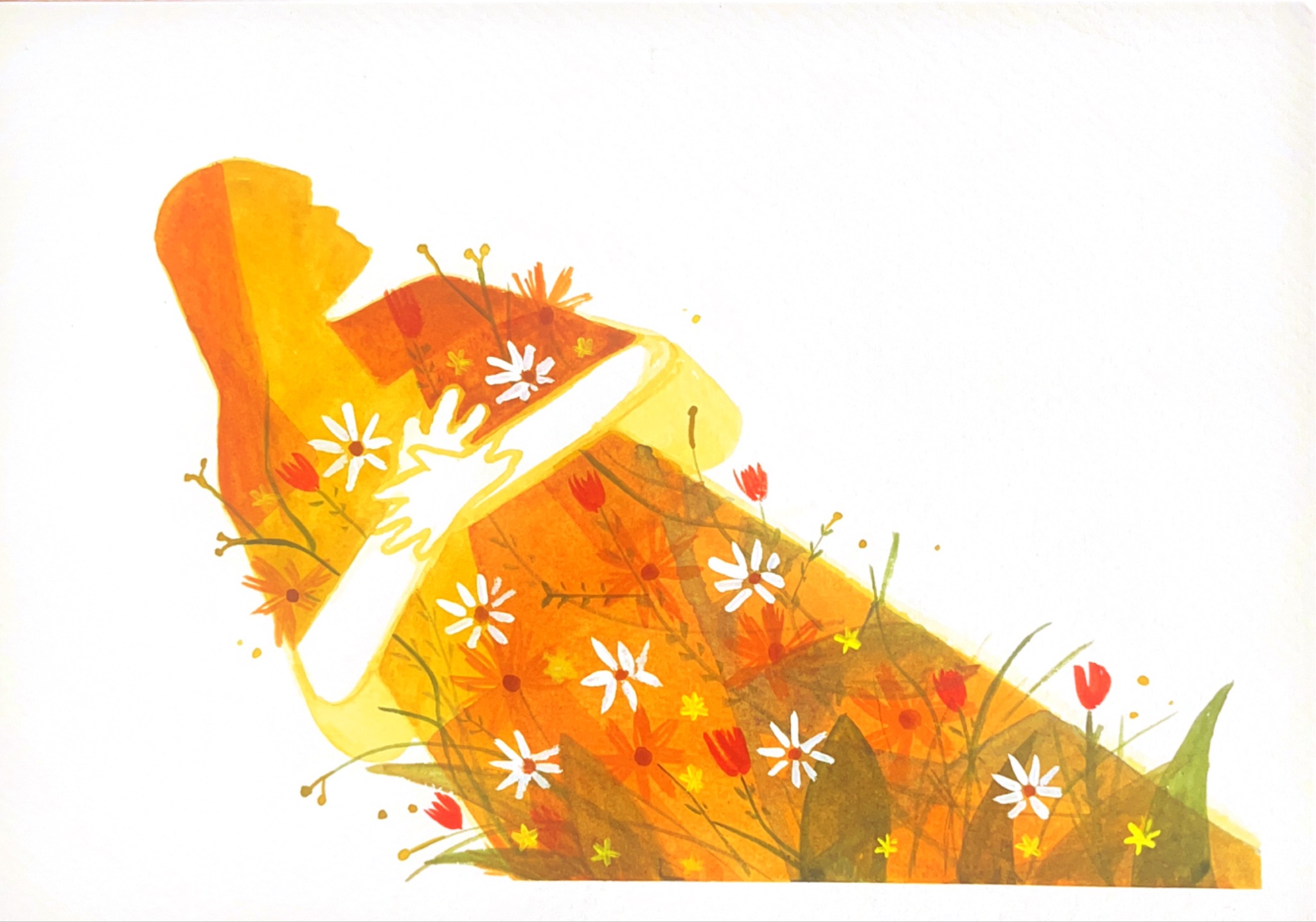
One of Arya’s most striking works is Sun Sakeena, a graphic novel adaptation of Saadat Hasan Manto’s Khol Do. The story, set against Partition, is raw and unflinching. “Adapting Manto saahab’s work into visuals was a responsibility I did not take lightly,” Arya stresses.
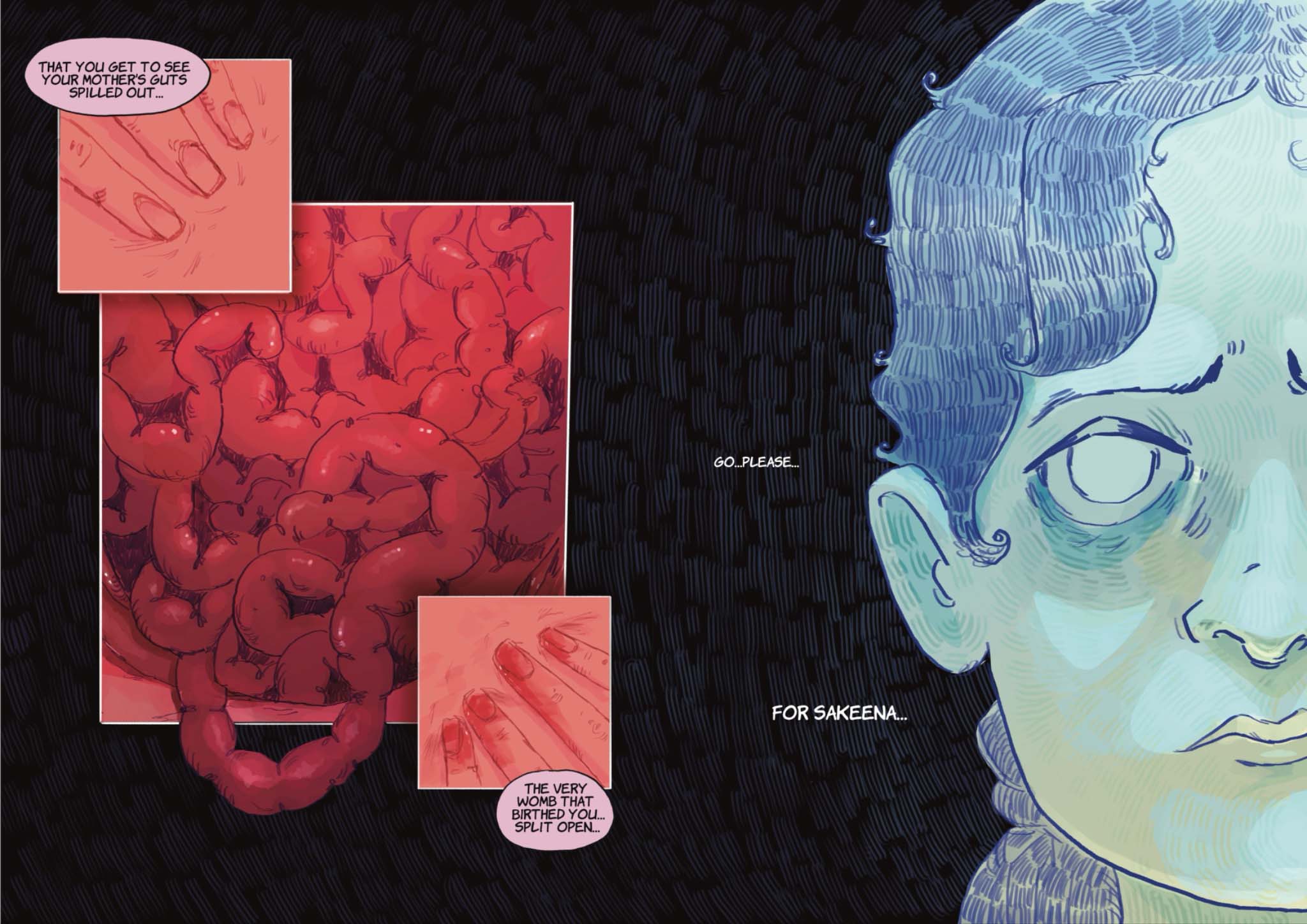

“Films have an internal logic…Sun Sakeena, being targeted towards young adults and adults had hues of red and orange, with hints of the blues, with the book starting with a sher by Faiz Ahmad Faiz.”
He drew inspiration from Mehdi Hassan’s ghazal Ghulon Mein Rang Bhare, based on Faiz Ahmad Faiz’s poetry. The yearning, the longing, and the pain resonated with the themes he was working with. Reds and oranges, cut through with blues, became the palette of his storyboards.
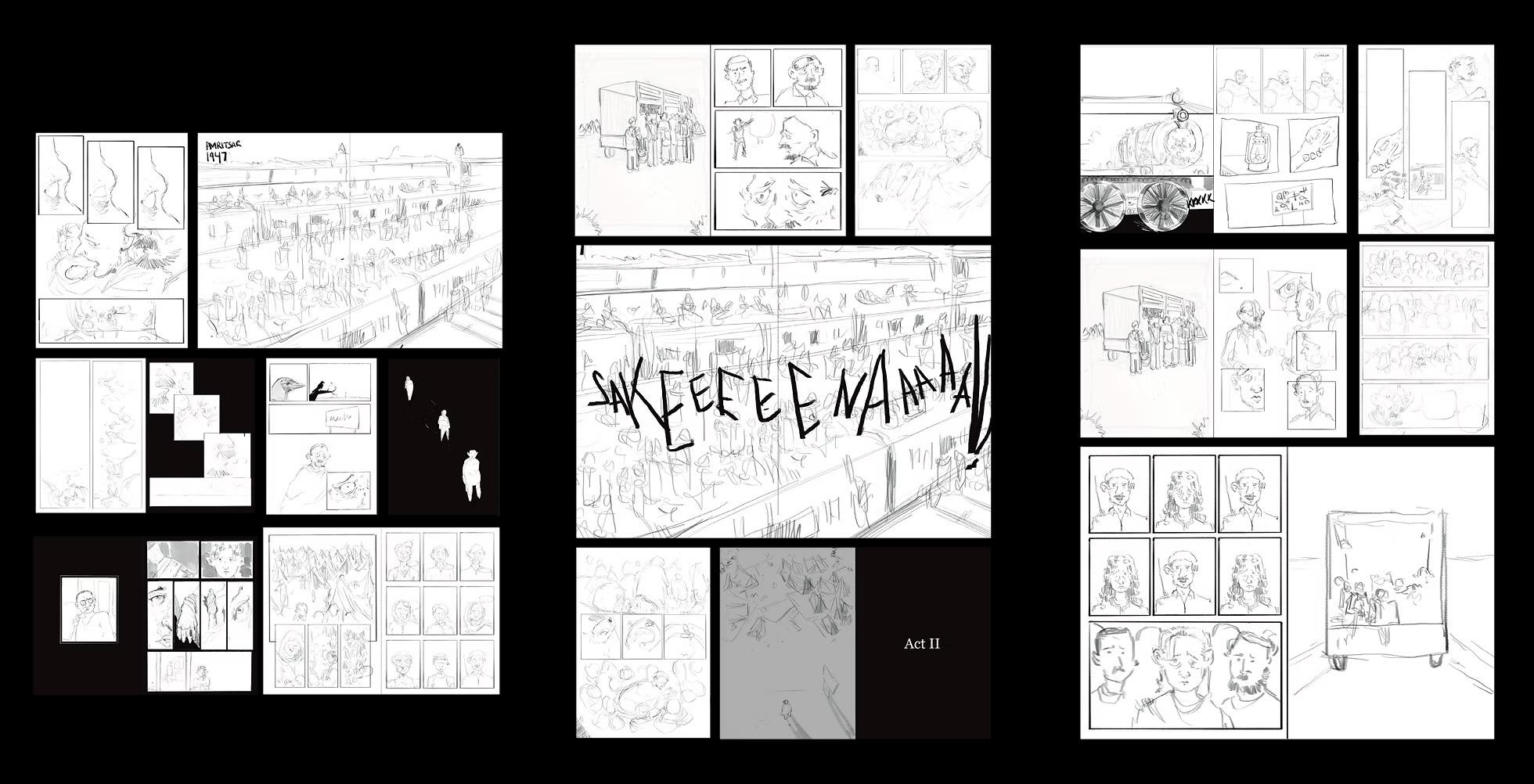
Flat plan for graphic novel Sun Sakeeena
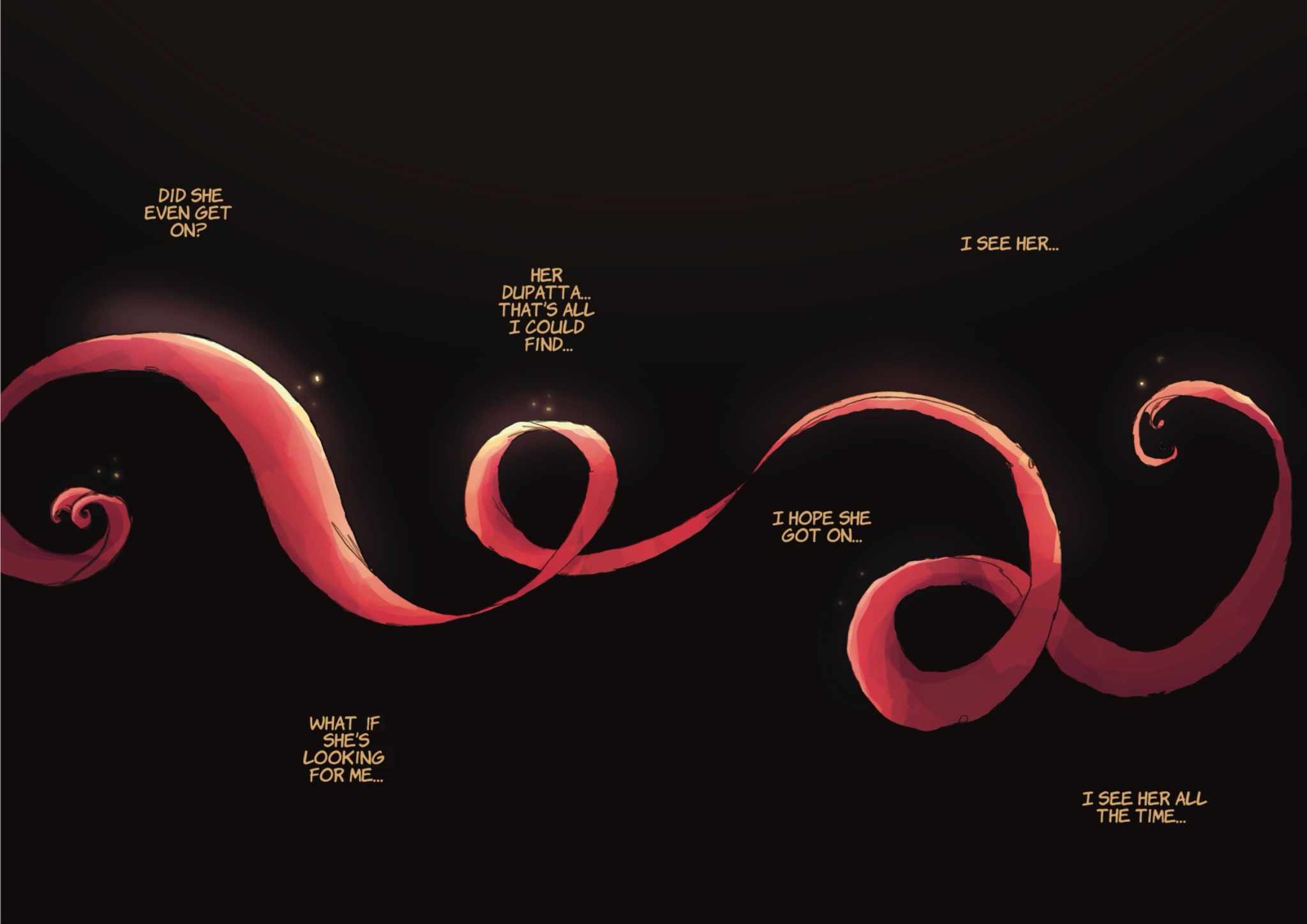
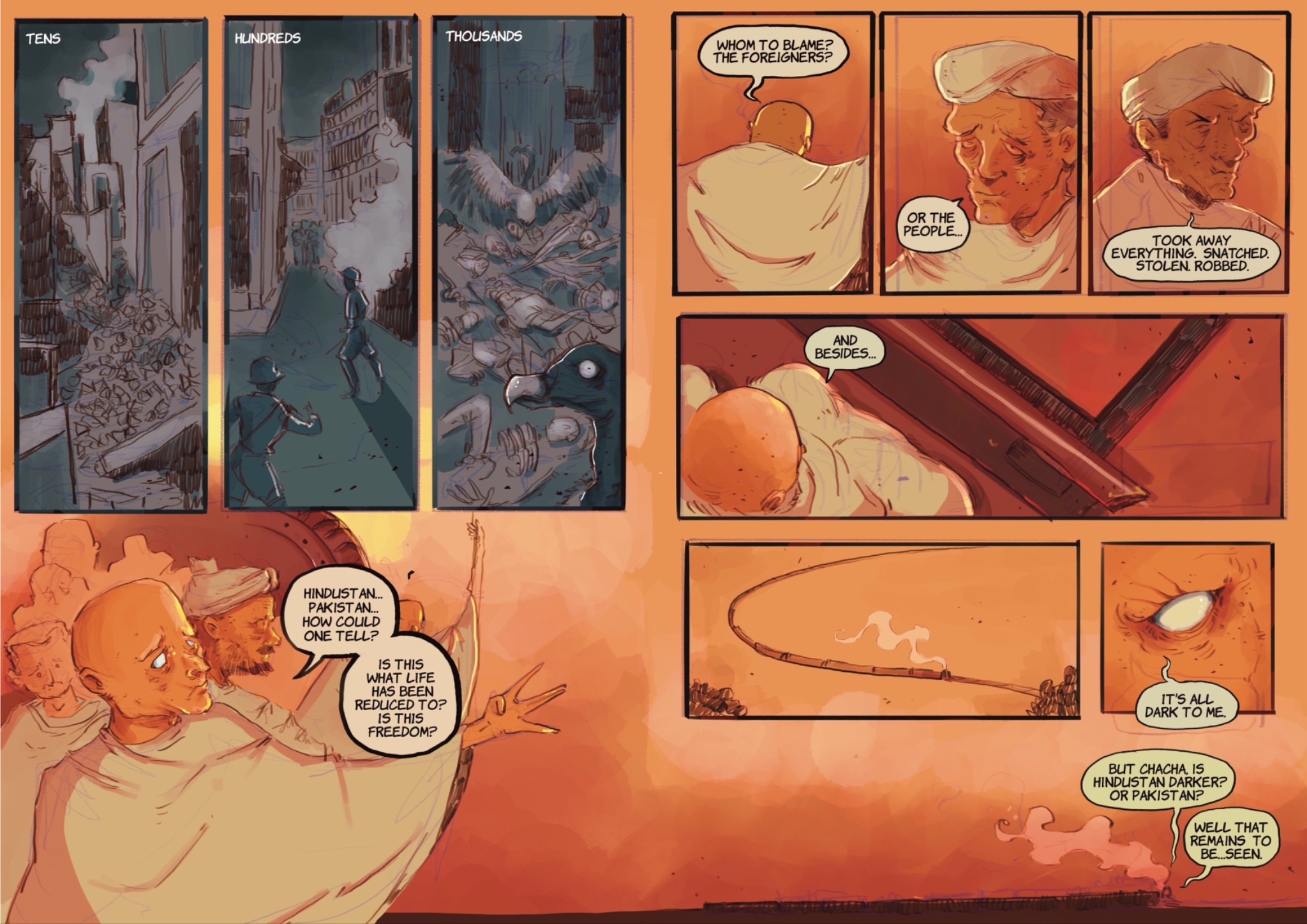
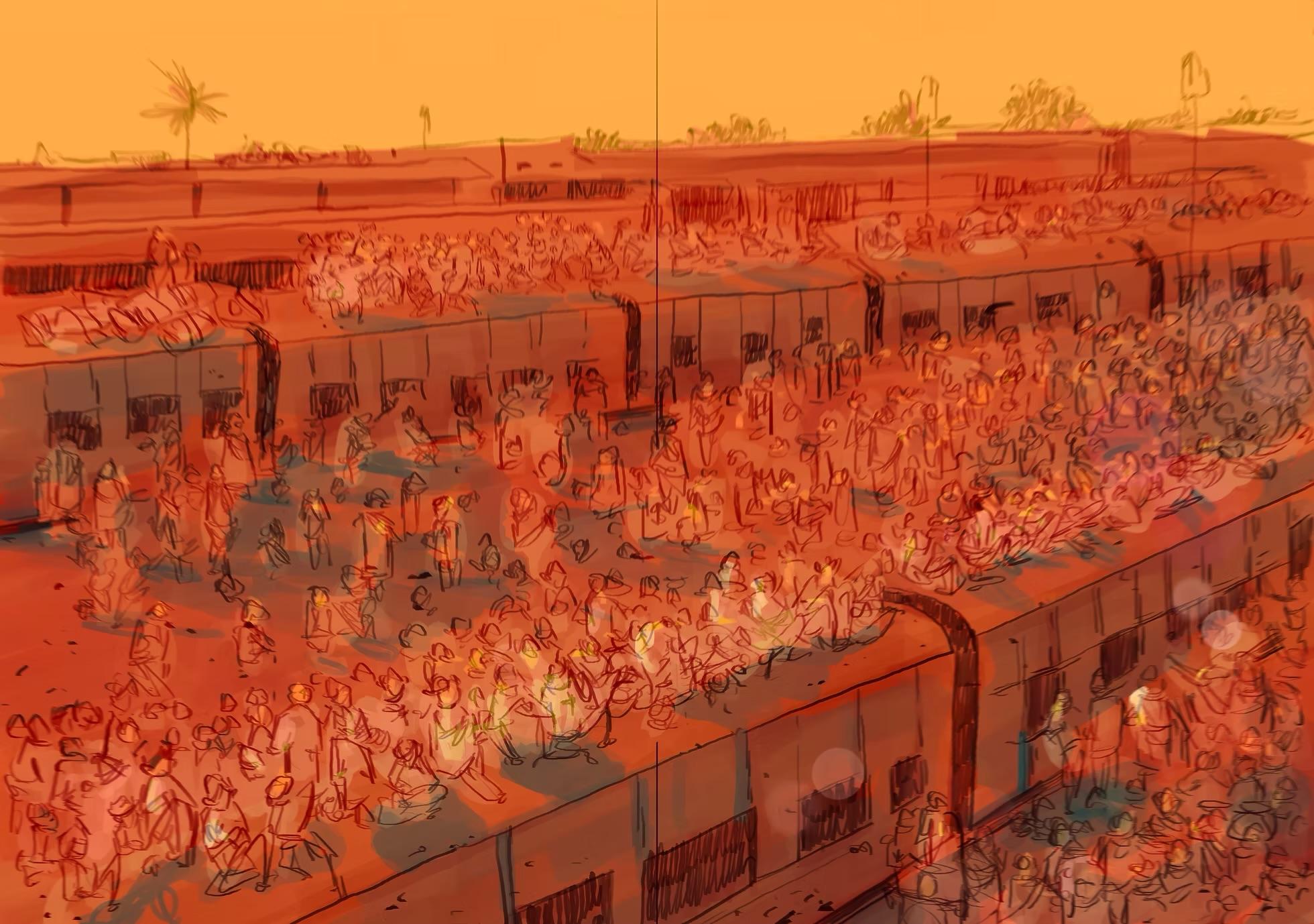
Spreads from the graphic novel Sun Sakeena
But Arya also brought something new: characters of his own making. Among them, a visually impaired refugee wondering if Pakistan would be more colourful than the land he left behind. “I hope and pray Manto saahab forgives me,” he admits, “but it felt like an important ingredient.” In his hands, Sun Sakeena became both homage and interpretation, balancing reverence for a literary giant with the boldness of a young artist’s vision.
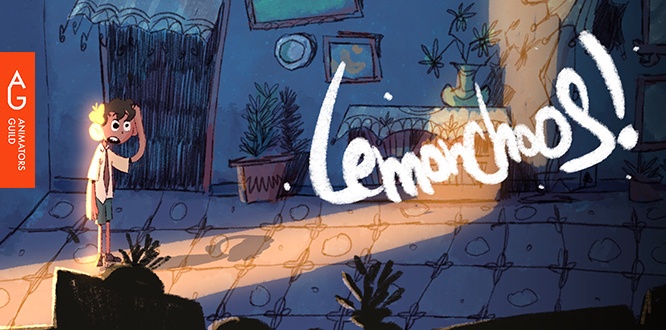
In his third year at NID, Arya worked with classmates on Lemonchoos!, a playful short film inspired by the tangy Indian candy. “It was a dream classroom project where I got to work with some of my favourite people,” he says. There were no directors- just a team sharing responsibilities and experimenting with shapes, colours, and lighthearted designs.
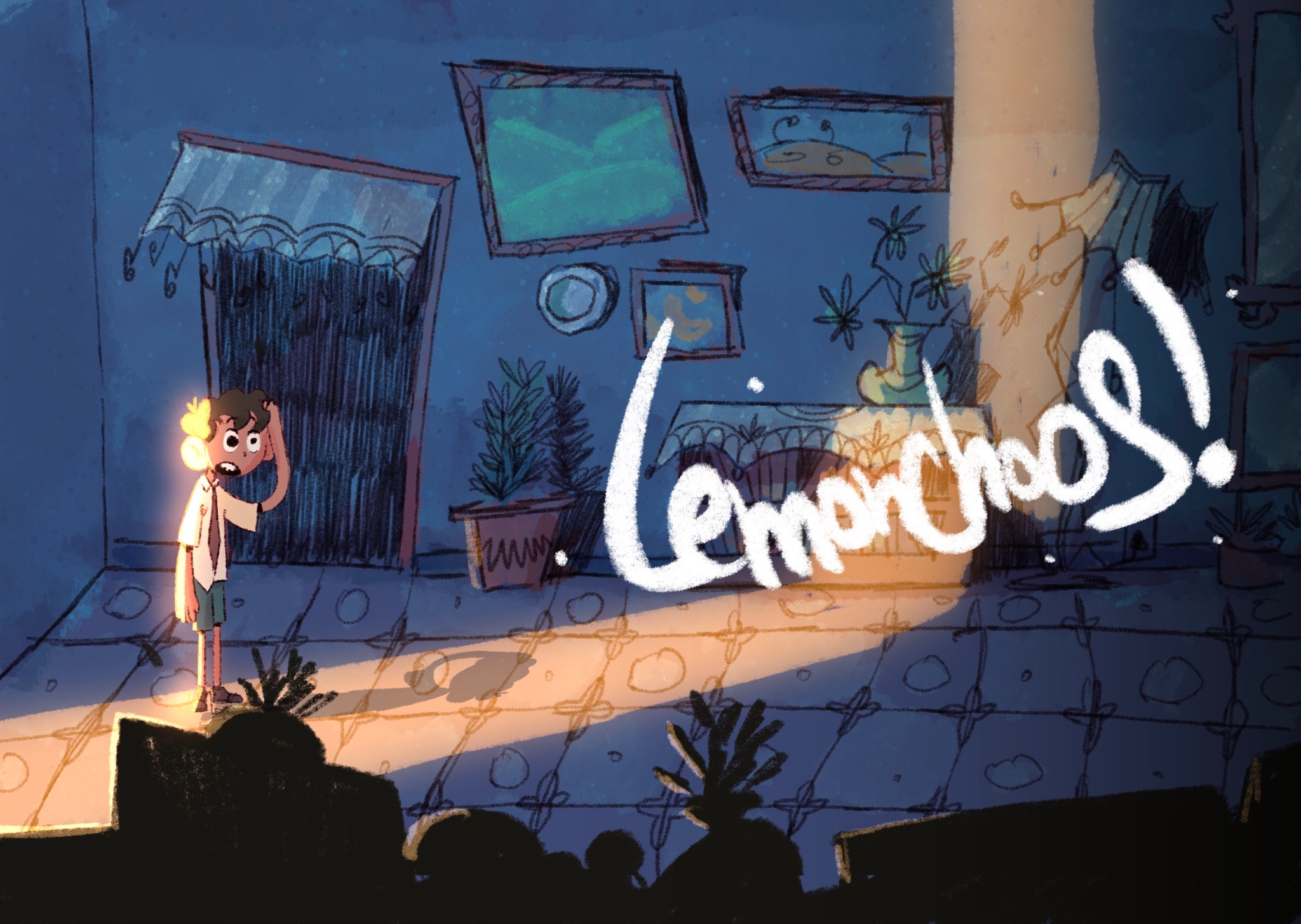
Development and visualisation for Lemonchoos!

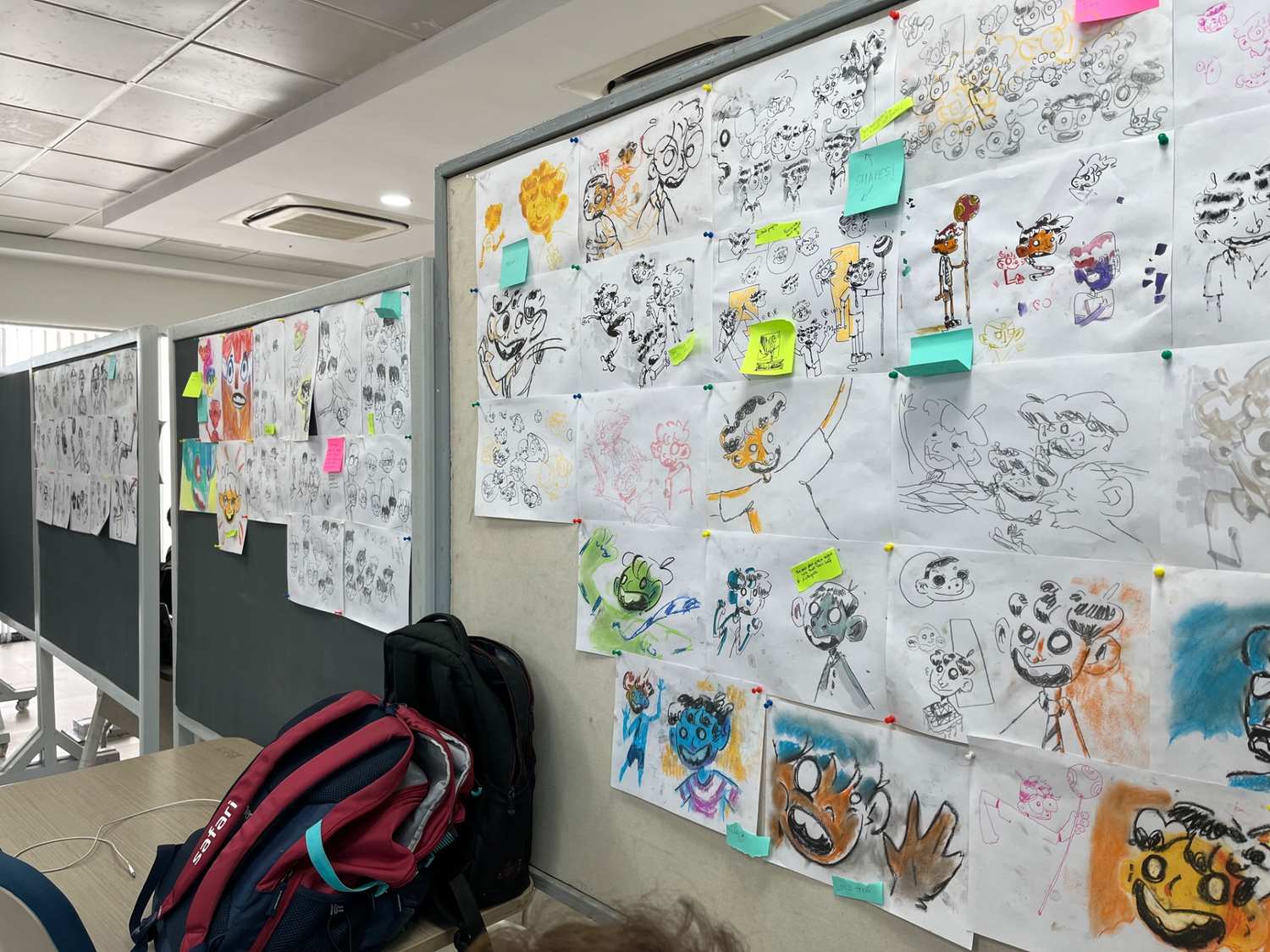

Behind the scenes of Lemonchoos!
Though the film was never completed, Lemonchoos! marked Arya’s first step into art direction and remains, in his words, “a reminder of the joy of collective experimentation.”
Arya’s professional journey has already seen collaboration with The Goood Stuff Studio, particularly on Netflix’s Azadi Ki Amrit Kahaniyan. He recalls the moment his friend Khushi Chauhan rang him about the opportunity. Soon he was part of a team with Isha Mangalmurti directing and Heramb Shet animating. “I could not have asked for a better team,” he says, adding that seeing the campaign screen at MIFF 2024 was “the icing on the cake.”
But even bigger than client projects was the leap into an independent practice. With Studio Disco Jetpack, Arya took on the double role of artist and studio runner.
“Some days you feel like you’re an artist, and some days you feel like you’re running a studio. And both have their quirks.”
The idea was simple: to create his own films, but also help other filmmakers make theirs. It was about producing, supporting, and celebrating stories- not just his own. “Thus began the party,” he jokes, “and I shall be dancing forever!”
“There’s often this belief that if you’re chasing your dreams, it must all be flowers and sunshine. To anyone and everyone thinking the same, I’d just like to say that someone who is chasing their dreams is also chasing their deadlines, and schedules, and their morning cup of tea before getting to work.”
If there is one project that embodies Arya’s heart, it is Patangein. What began as a character design assignment grew into a passion project: a nostalgic story of two brothers in Old Lucknow. “A lot changed,” he reflects. “Characters entered and left, the art changed, story beats began to shift. But what stayed constant was Patangein being a group effort.”
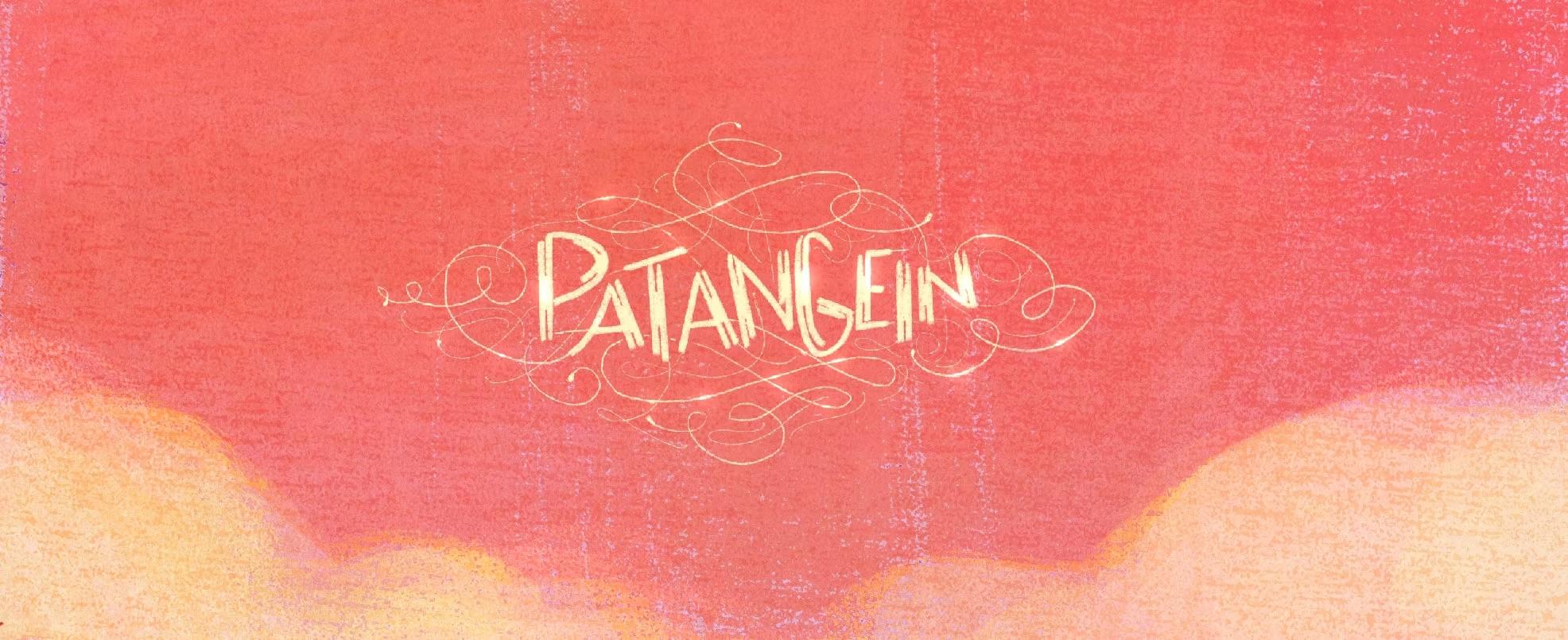
Friends pitched in from the start- storyboarding, sound research, early concept sketches- without money or formal promises. The story took shape around real people, inspired by their quirks, tastes, and responsibilities. Later, producer Parth Kelkar joined, taking on the heavy lifting of deadlines, pitch decks, and production strategy.
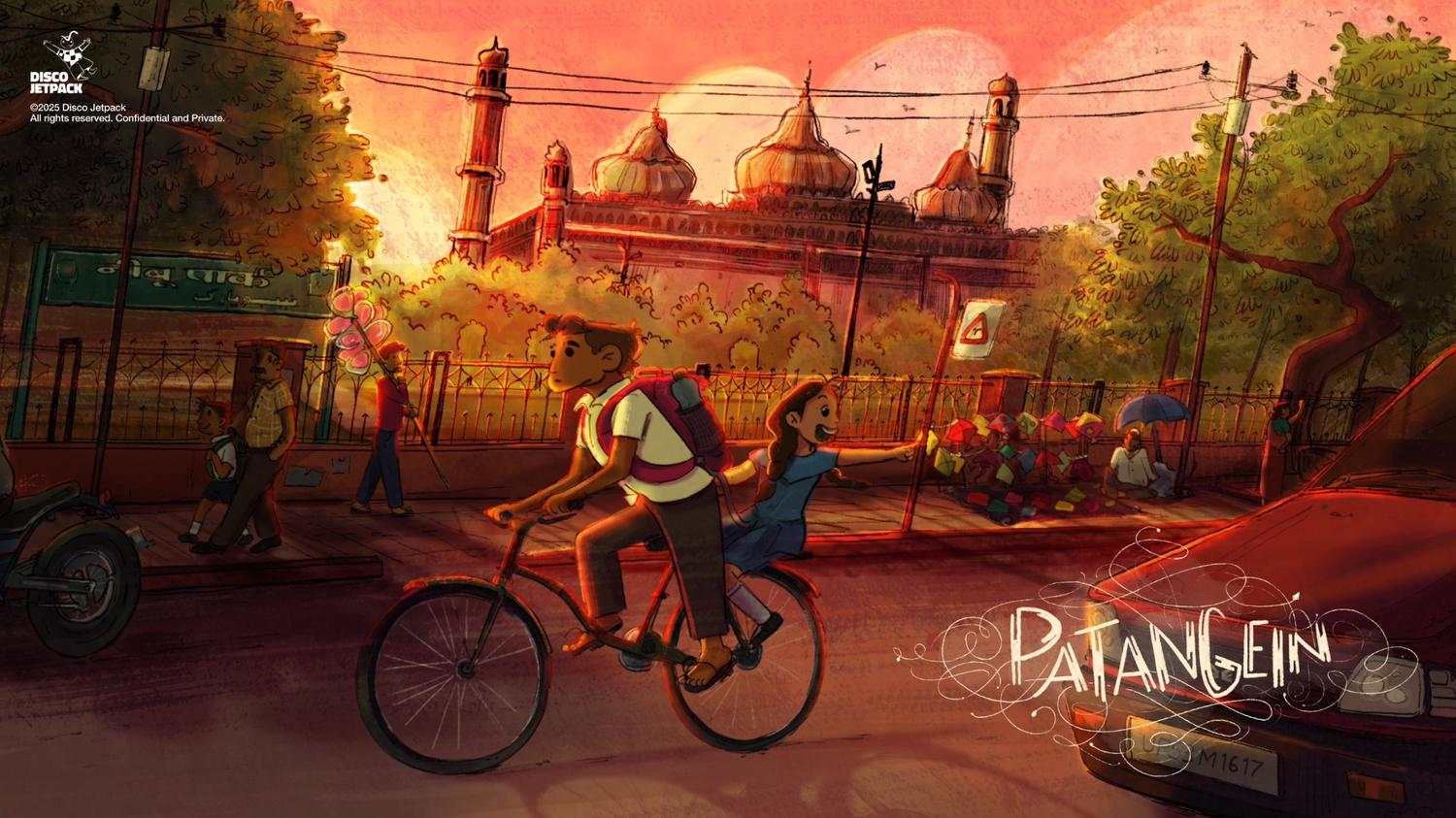
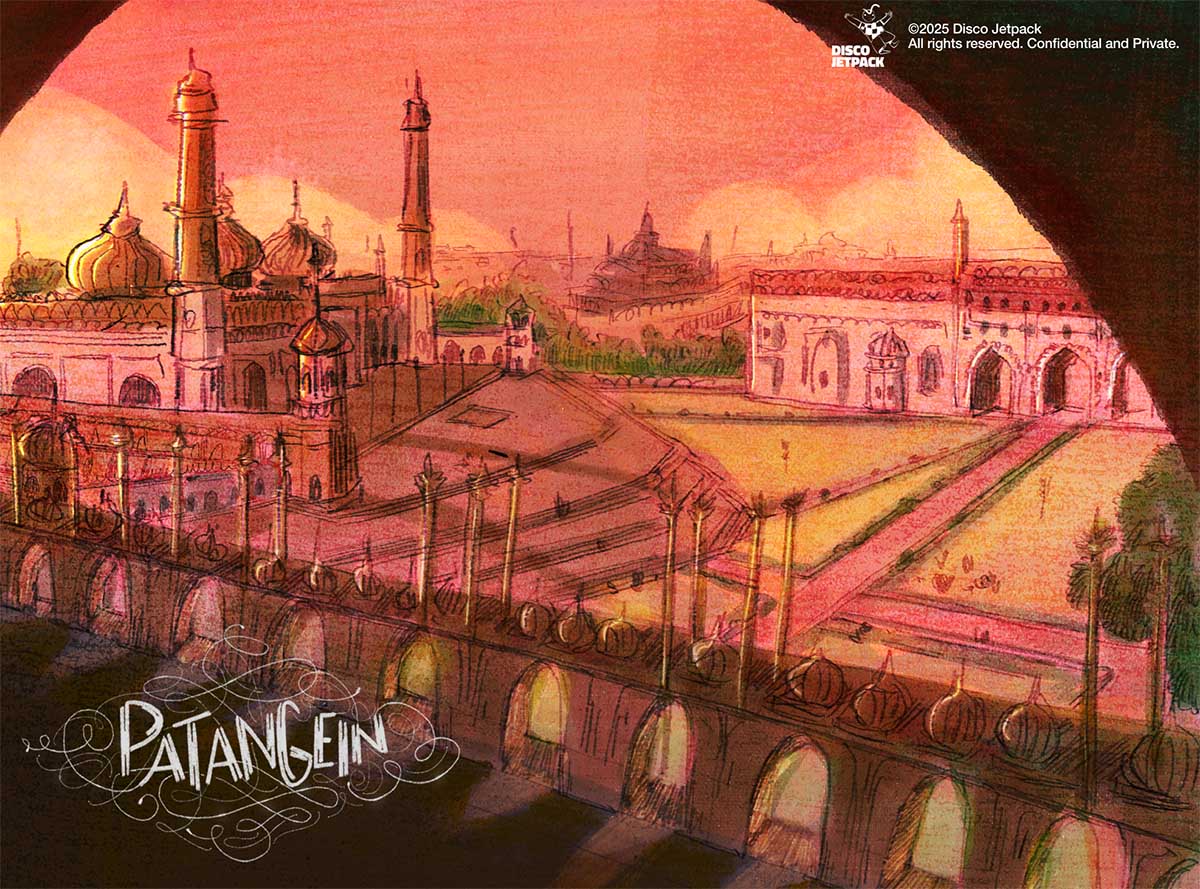
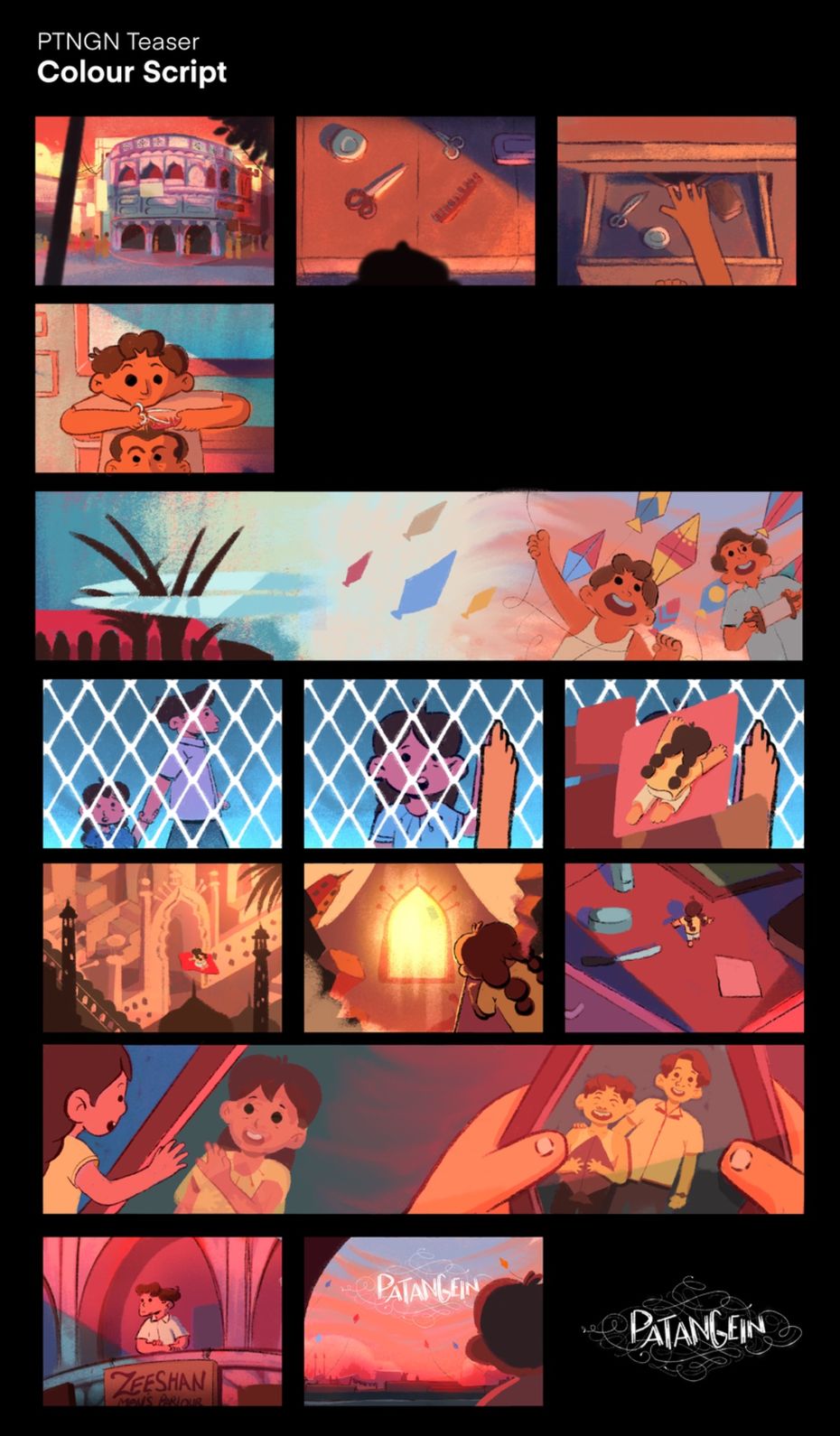
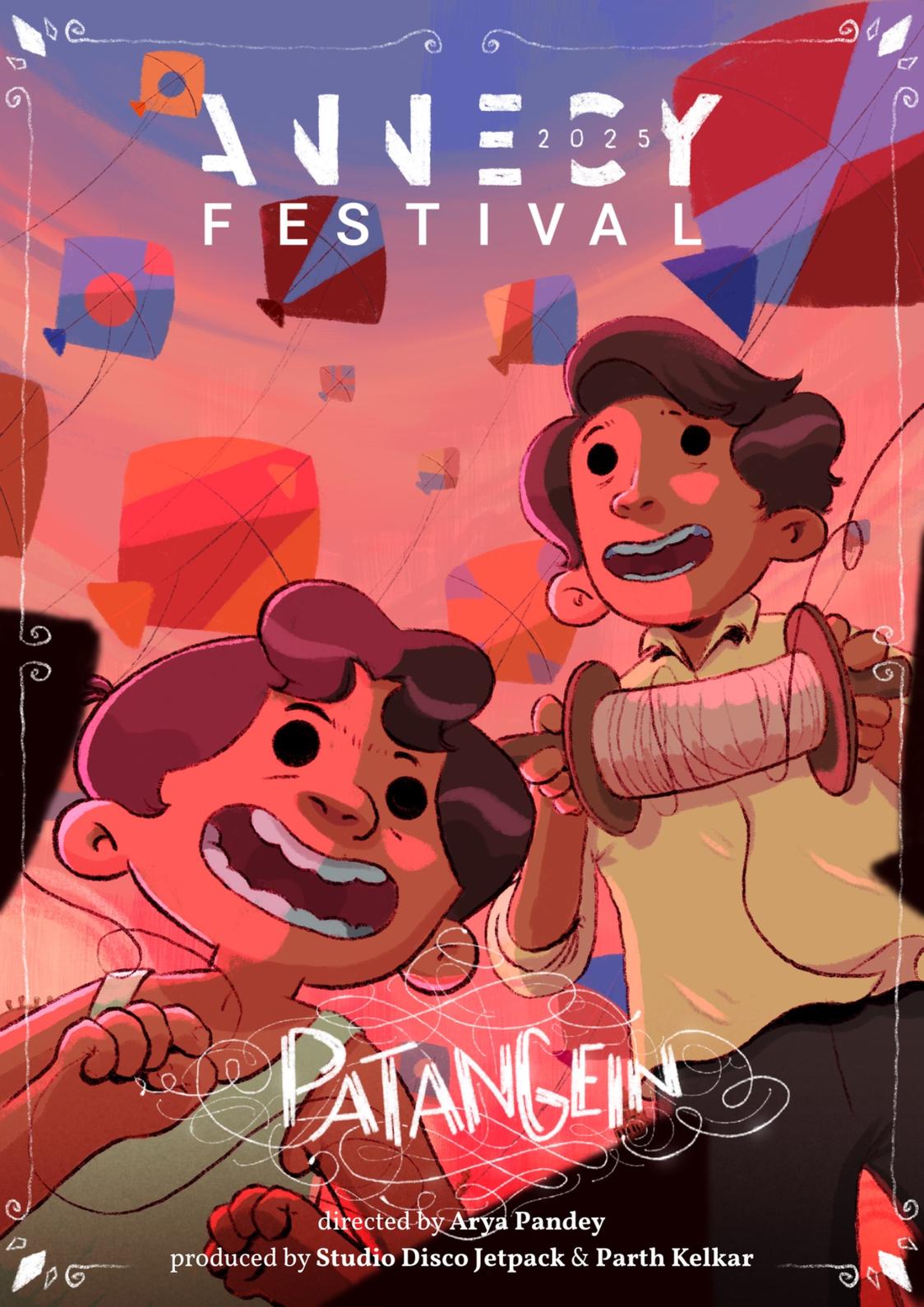
“You need someone like that in your corner- someone who will present you with facts, good or bad.”
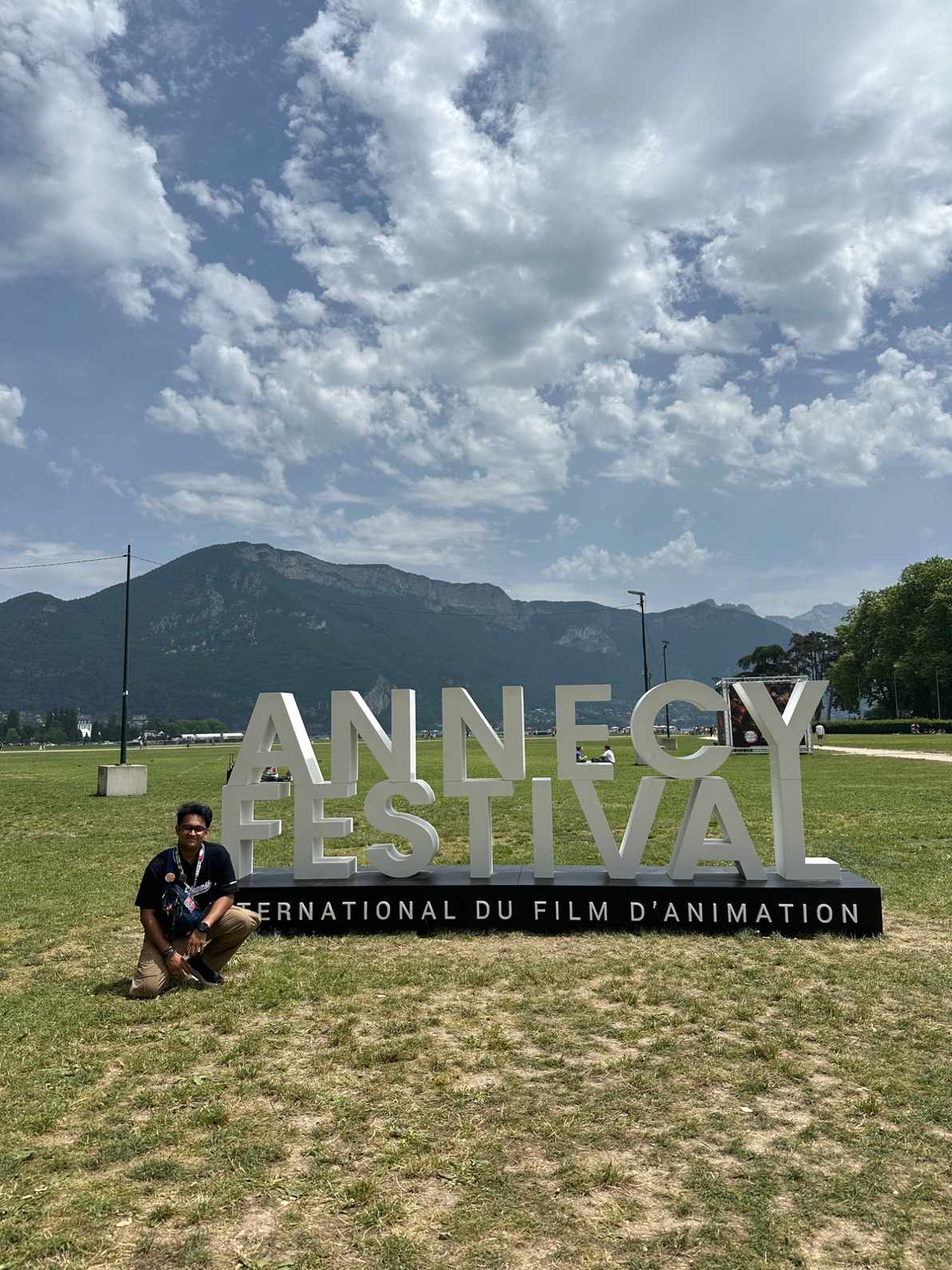
The turning point came in 2025, when Arya pitched Patangein at the Annecy International Animation Festival, supported by AniMela and MIFA mentors. Standing before a global audience, he shared a deeply personal story from his hometown. The response was overwhelming.
“It was stunning to hear people who didn’t even know where Lucknow was tell me they loved the colours of the film and now want to visit.”
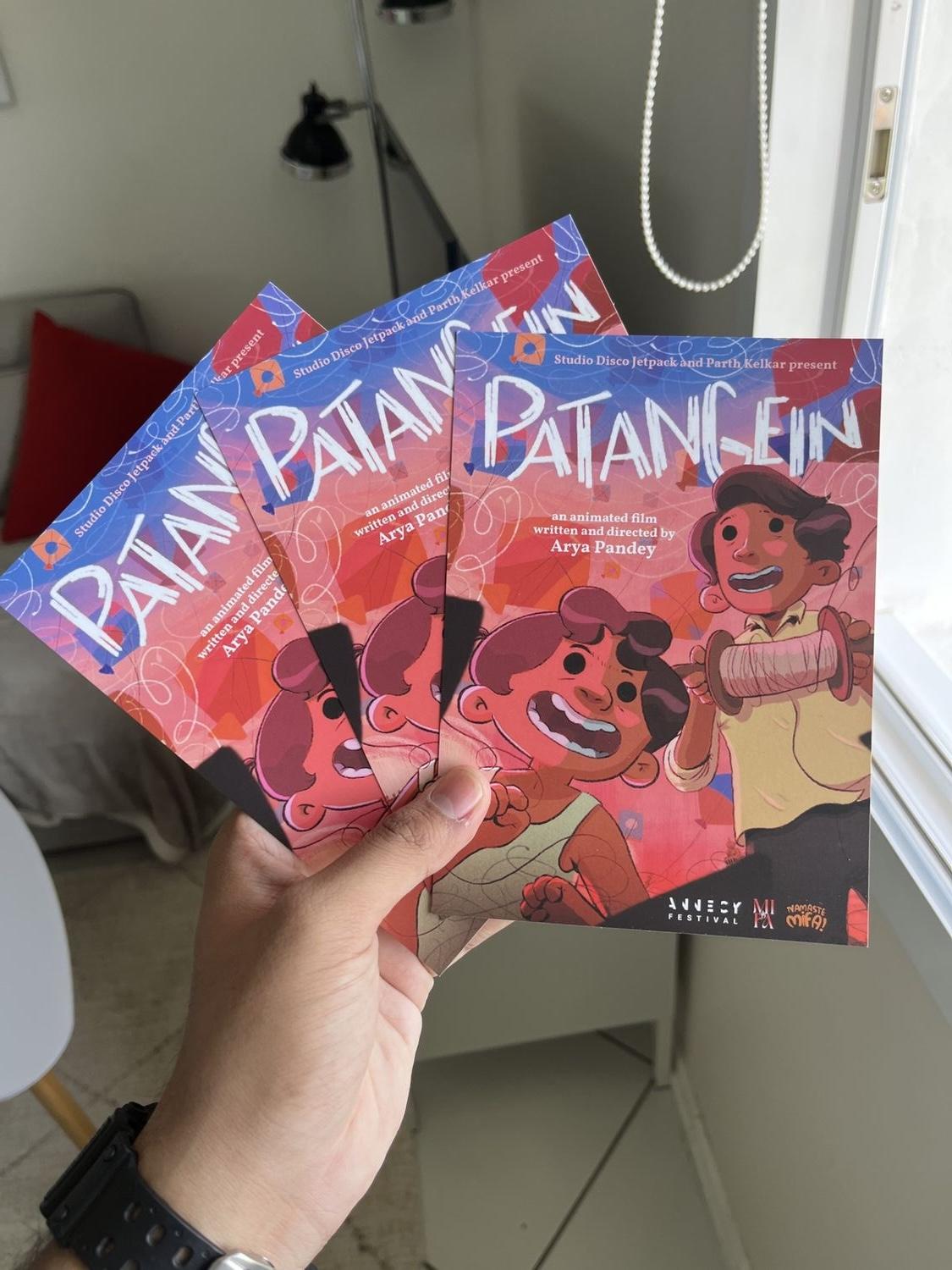
The teaser, crafted by a small team- Aritra Guha Ray, Basim Abu, Janhavi Kolte, Mranank Sharma, and Khushi Sridhar- was met with appreciation.
“If you have a story to tell, there will always be listeners, around you and from afar.”
For now, Patangein remains the prime focus. Beyond that, Arya hints at another graphic novel and the desire to continue producing films for others. Music fuels him- whether ghazals while painting Lucknow or yacht rock while sketching superheroes. He collects art obsessively, convinced there can never be enough.

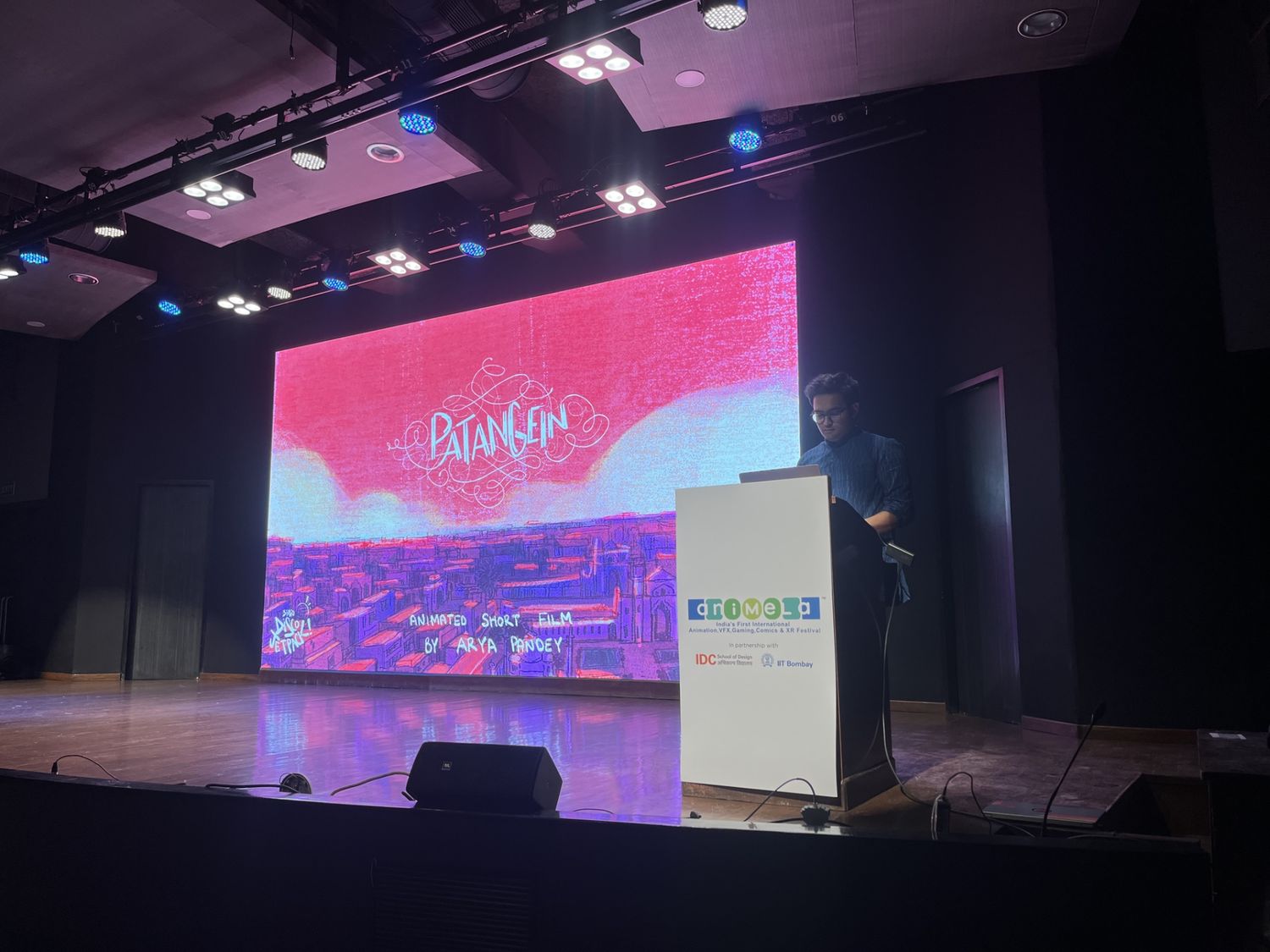
Above all, Arya remains rooted in his city, his family, and the conviction that stories worth telling find their way. “It’s difficult to get someone to pay for your passion,” he admits, “but if you believe in your story, and love it first yourself, others will too.”
From Sun Sakeena’s publication to the IMC workshop, from the Animela pitch in Mumbai to the Namaste MIFA pitch at Annecy, Arya’s journey has been nothing short of extraordinary- a blend of comics, culture, and conviction that continues to push Indian storytelling onto global stages. And with Patangein poised to take flight, it’s clear his kites are only just beginning to soar.
We thank Arya for his time and wish him the very best for the future.
You can reach out to Arya and stay updated with his work on the channels below.
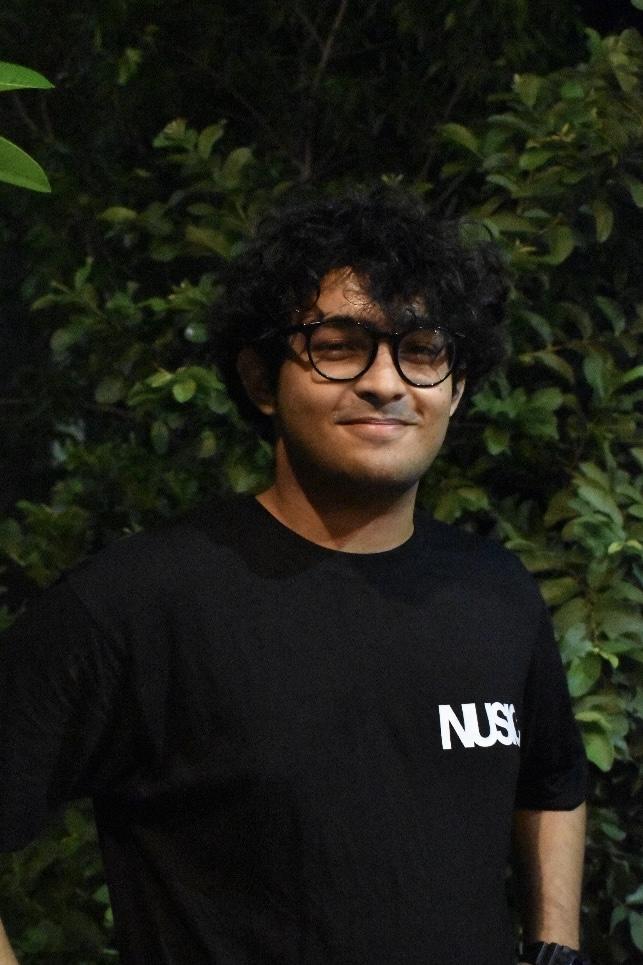
Arya Pandey