
Can a prompt be haunted?
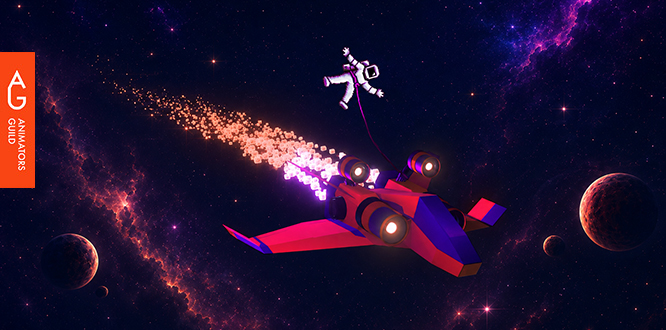
“Bakuryūha” - InuYasha
This piece began, fittingly enough, with an Instagram post.
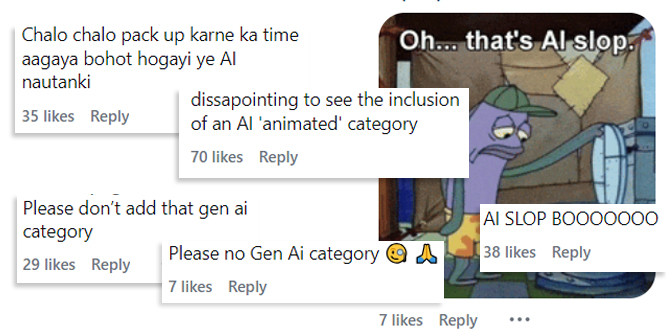
The Animators Guild India Festival announced its fifth edition with the promise of being “bigger, bolder, and built for the future of storytelling.” Alongside its regular categories, AGIF 2026 also introduced three new ones, including a category for generative AI. The phrasing was optimistic, even celebratory: “expanding the horizons of storytelling.” The response, at least in the comments, was considerably less sunny. Animators and artists questioned whether a guild meant to protect craft should place generative AI beside forms of work built through years of training, labour, drawing, modelling, editing, failure and revision.
That reaction is worth taking seriously. Not every angry comment on the internet is a manifesto, but the upset itself is revealing. The resistance to AI-generated work is no longer a fringe anxiety or a sentimental defence of the handmade. In every creative field you can name, the same argument keeps appearing: about authorship, labour, and what exactly is being taken when a machine trained on human work starts competing with the people who made that training possible.
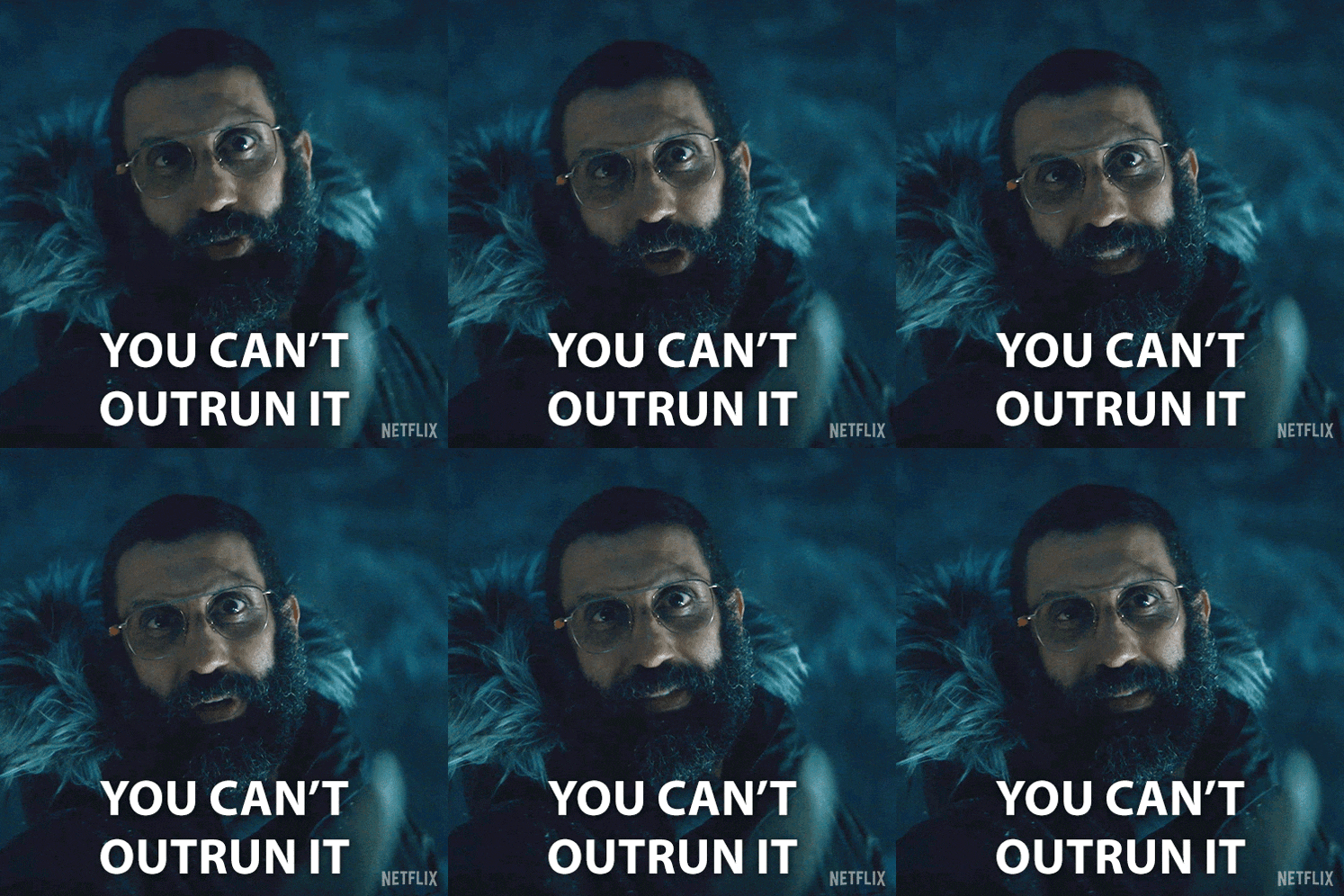
By now, the AI conversation has calcified into three familiar positions. It's miraculous and will do everything. It's catastrophic and will destroy everything. And, for those who've presumably had their morning coffee (or tea), it can be useful if handled sensibly.
Ideally, something generated by AI should not provoke a philosophical crisis. Whether it’s a cleaned-up spreadsheet, a snazzily summarised report, a neatly punctuated transcript, or even those pointless emails, most people understand and appreciate the appeal of such help. Life’s too short for anyone to suffer the agonies of having to think about rewriting “please find attached” interestingly for the Nth time. But art, craft or creativity… that’s different.
Or at least, we still want it to be. Most of us (probably all of us) have experienced an “Uh-oh” moment when seeing what a specific AI tool was capable of for the first time. Mine was in early 2023 when reading what ChatGPT generated in under 30 seconds in response to a pretty generic prompt. I was seeing the potential future of writing and writers, and it was not good.
People have often asked whether AI can write better than me, to which my response has consistently been - It doesn’t matter. What matters is when the person taking a call on the work - client, boss, random passerby - thinks what AI has generated is “good enough”. That’s a key inflection point.
Another milestone (or tombstone) is the strange discomfort when acknowledging - reluctantly or otherwise - that an LLM or a machine has made something… beautiful. Let me reiterate: not useful, efficient, or cleverly formatted, but beautiful.
The resistance isn't only about toil or copyright, though it's certainly about both. It's about trespass. What exactly is being crossed when an AI trained on human work starts producing things that compete with the people whose labour made it possible?
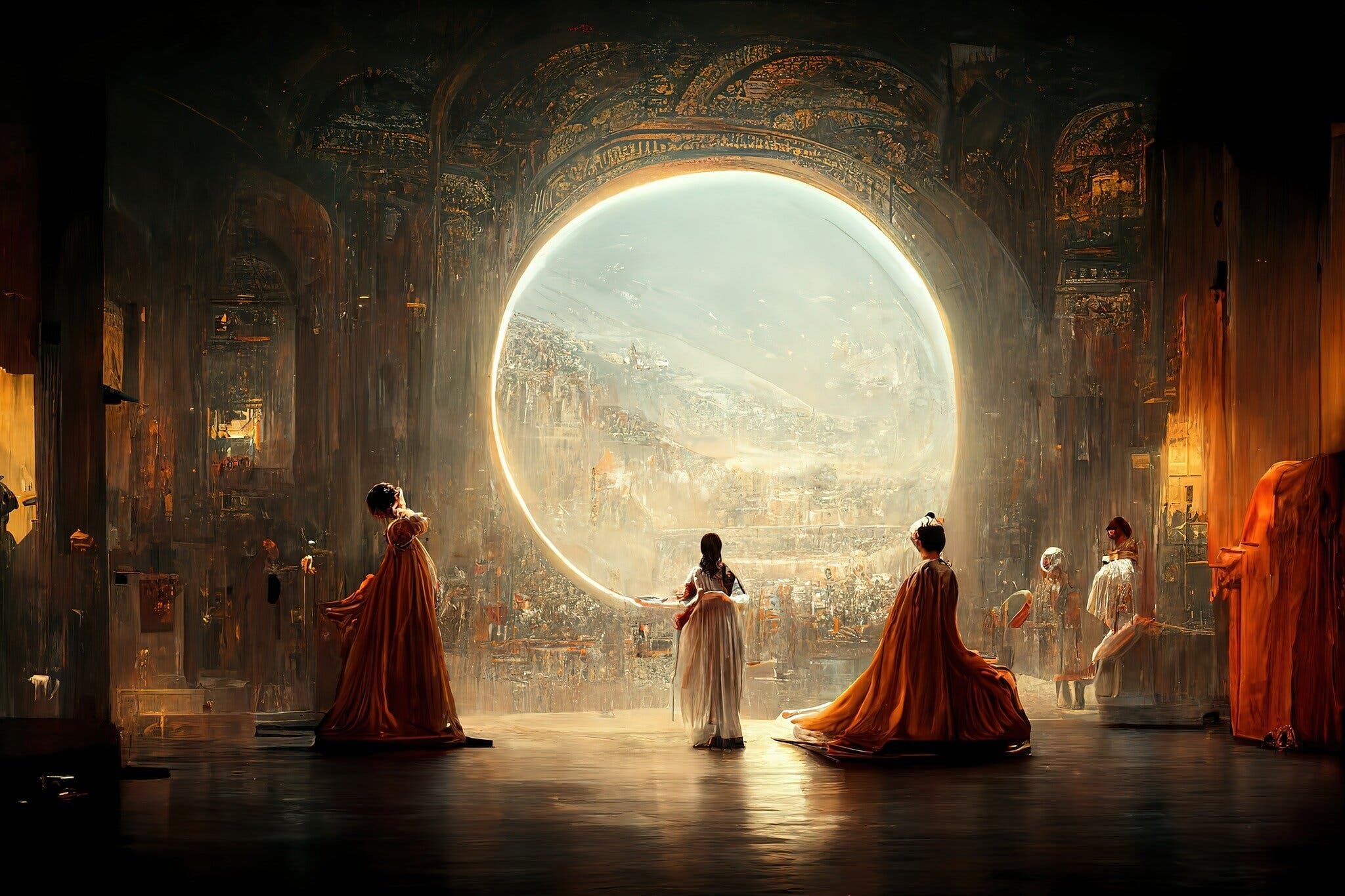
Picture Credit : Jason Allen
One early flashpoint, in 2022, was visual art. In the middle of that year, Jason Allen won first place in the digital arts category at the Colorado State Fair with Théâtre D’opéra Spatial, an image made using Midjourney.
The win caused immediate controversy, not because people had never seen digital tools used in art before, but because this felt like a seismic shift. Here was a prize given to an image whose most spectacular qualities had ostensibly been brought to life through prompts and an AI system trained on a vast cultural smorgasbord of existing work. Never mind the fact that he reportedly spent over 100 hours on creating it, questions like who made this, what counts as skill and what counts as authorship suddenly transcended the barrier between theory and reality.
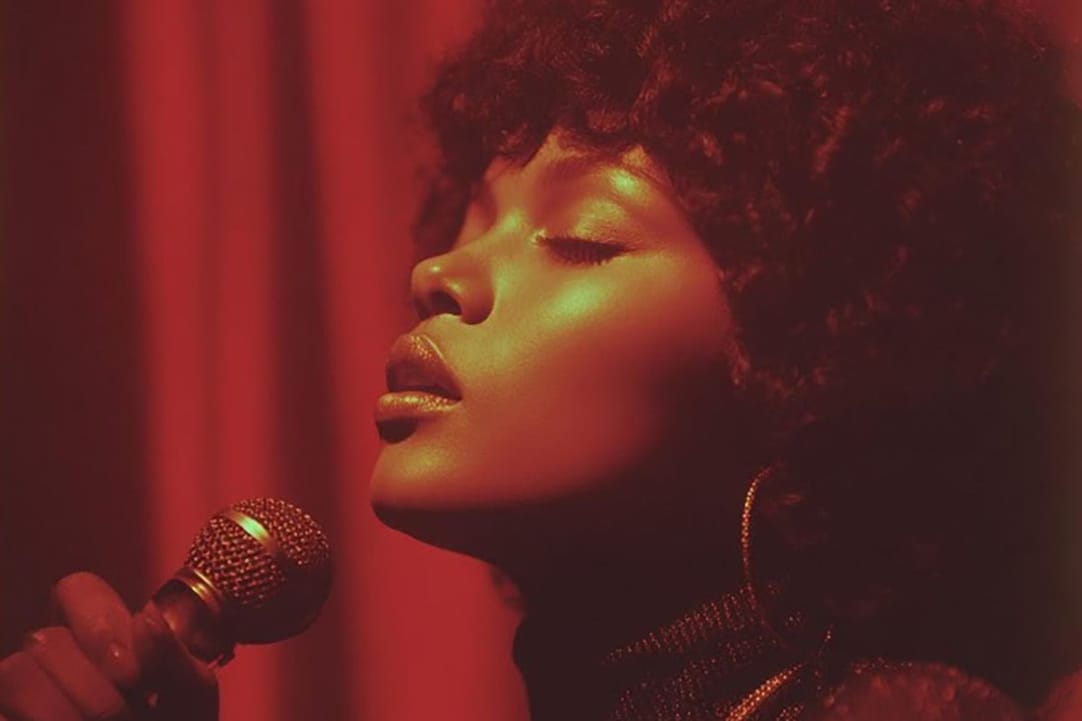
Sienna Rose : Musical artist?
In music, the argument has moved beyond novelty songs and gimmicks into lawsuits, licensing battles and a larger worry about the flooding of platforms with cheap synthetic content. Let’s take the example of Sienna Rose, an artiste on Spotify who has approximately 4 million monthly listeners on the platform. Except, according to the BBC, she’s likely not a real person. The American Federation of Musicians sued Warner Music Group and Universal Music Group in 2026, alleging that the labels had licensed musicians’ recordings for AI training without properly compensating the musicians themselves. This joined earlier lawsuits by major labels against Suno and Udio, framing the issue sharply: the labels argued that AI music systems could generate recordings that would compete with, cheapen and drown out human artists.
Ted Gioia, writing in The Honest Broker, has been one of the more persistent cultural critics of AI music, worrying not only about theft or imitation but about what happens to musical seriousness when production becomes seemingly effortless. One case he highlighted was that of Murphy Campbell, whose music was allegedly copied by an AI impersonator who then went a step further: the impostor filed claims against Campbell’s own original tracks, causing her YouTube monetisation to be affected. YouTube eventually reversed course after the case drew wider attention. For Gioia, the larger conflict is hard to ignore: the platform expected to police these abuses belongs to Google, a company making enormous investments in AI.
Books have not escaped either. The Authors Guild has warned that AI systems trained on copyrighted works without permission pose a serious threat to writers and literary culture. In 2026, Hachette withdrew the horror novel Shy Girl by Mia Ballard after allegations circulated online that parts of it were AI-generated; the author denied personally using AI to write it, saying an acquaintance had used AI tools “in an earlier version”. Quite. The point here is not to judge one novel’s authorship from a distance but to notice how quickly suspicion itself has entered the reading experience. Once the reader begins asking, “Was this written, or was it generated?”, a private, invisible agreement between the author and the reader has already been disturbed.
Now we come to the second “Uh-oh” moment: when the release of advanced image-generation tools in ChatGPT sparked the 2025 wave of AI images made in the style of Studio Ghibli. Actually, never mind “Uh-oh”. It was the crossing of a red line.
For a few weeks, the internet seemed inundated by soft skies, rounded faces, wistful landscapes and that floating atmosphere people associate with the films of Hayao Miyazaki. Family photos became Ghibli-like scenes. Memes became Ghibli-like tableaux. Political images, film stills, pets, couples, dead relatives, celebrities - the ever-hungry AI was fed everything - and it was all transformed into pictures that supposedly radiated a familiar warmth, but left many people cold. Because Miyazaki and his work have transcended ‘respected’ and are firmly in the ‘revered’ category.
But part of the problem was that the results were often charming. If the images had been ugly, the argument would have been simpler, and the AI easier to dismiss. But many of the images were like souvenirs - instantly recognisable, easy to like, and faintly hollow once the first frisson of delight wore off. They looked like what they were; a pale imitation of someone else’s imagination.
The discomfort was heightened by the fact that Miyazaki himself had already given the world one of the most memorable rebukes of AI animation. In the 2016 documentary Never-Ending Man: Hayao Miyazaki, after being shown an AI-generated animation experiment, he said, “I am utterly disgusted,” and added, “I would never wish to incorporate this technology into my work at all. I strongly feel this is an insult to life itself.”
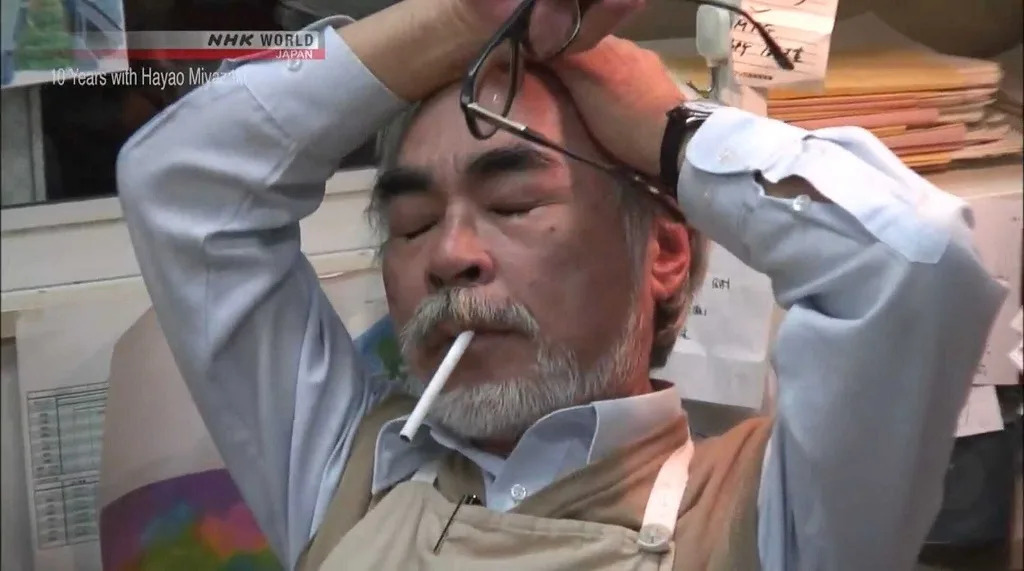
Hayao Miyazaki's Disgust
You should see the expressions of the guys who conducted the experiment. Big Uff.
Let’s not forget that Miyazaki was reacting to a specific AI animation demonstration in 2016, not to ChatGPT, Midjourney or the 2025 Ghibli-style image trend, which did not yet exist. But does that fact let the trend off the hook? If anything, it makes the later imitation feel stranger. Here was an artist who had publicly rejected such technology in the strongest possible terms, and years later the internet celebrated a tool partly by using it to mass-produce images in the visual neighbourhood of his life’s work.
There is something almost too smug, too breathtakingly arrogant about that. A digital Ozymandias, asking mighty Miyazaki to look upon AI’s works and despair.
Miyazaki’s objection was not a complaint that new tools are bad. His films are themselves technical achievements, made by teams of artists working through complex modern production systems. His objection, at least in that famous clip, seemed to be about the relationship between movement and life. The body, observation, effort, choices, pain, joy… all of these matter from frame to frame. To him, the grotesque thing was probably not merely that a computer had animated something, but that it had produced a simulation of life without any felt understanding of life.
That is why “in the style of Studio Ghibli” is not an innocent phrase. A style is a densely woven tapestry of past choices. It is effort, temperament, memory, discipline, constraint, taste, obsession, accident, revision and refusal to compromise. Imagine reducing all that to a prompt.
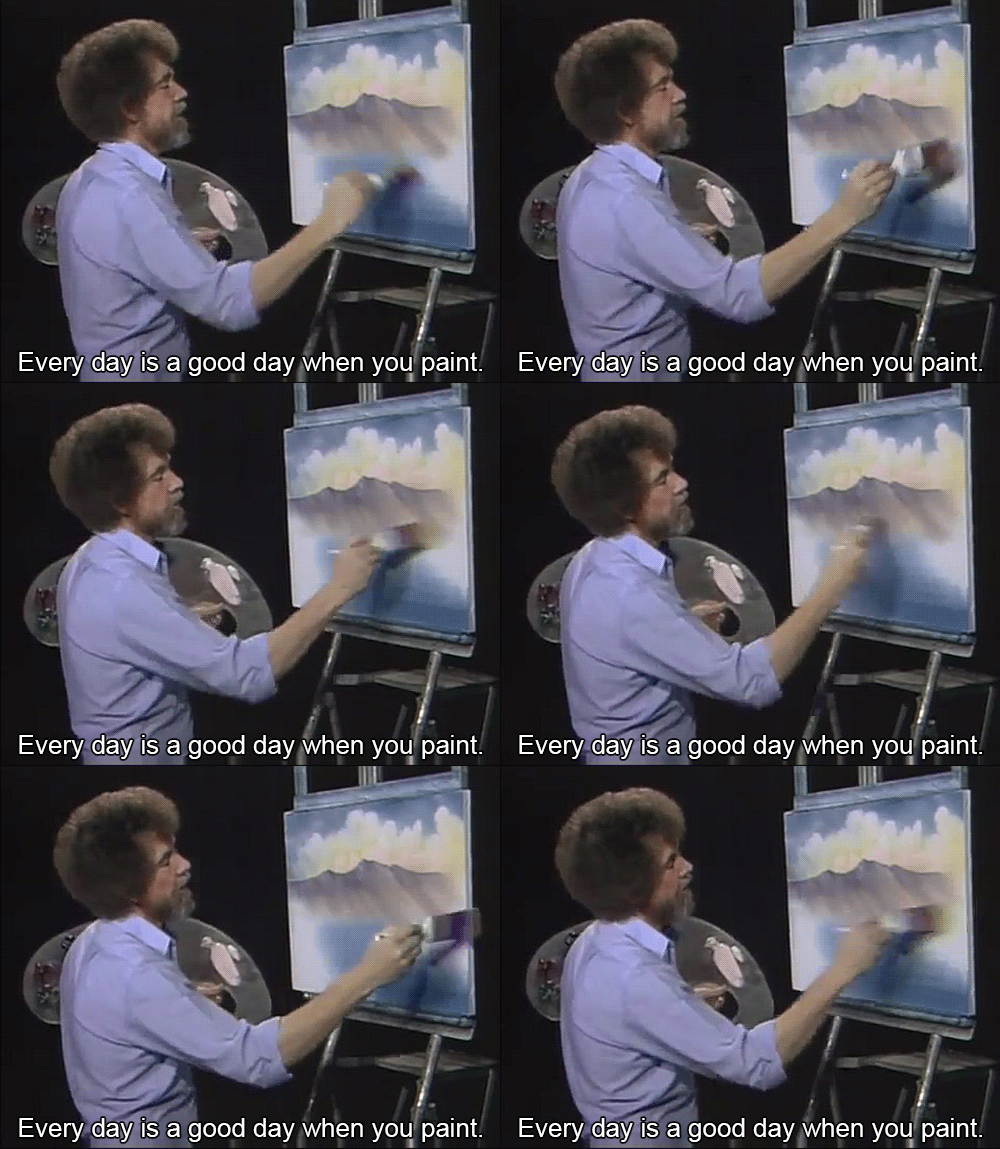
Art has always borrowed. Apprentices copied masters. Painters learned by studying other painters. Musicians quote, sample, remix and transform. Writers begin in imitation before finding their own voice, if they're lucky. Every creative tradition is partly a conversation with what came before. But there is a difference between influence and extraction. Influence passes through a person: it changes under pressure from their limitations, anxieties, taste and time. Extraction doesn't undergo that journey. There is no struggle, only ingestion and the regurgitation of something the industry likes to call frictionless.
This is why so much AI work - art, music, writing - leaves people uneasy even when it seems good.
That may sound unfair to the people using these tools thoughtfully. Not every use of AI is lazy. A designer may use it to explore references quickly. An author may use it to organise notes, test arguments or break out of writer’s block. A musician may use it as a collaborator, or even as a deliberately artificial instrument. For people with limited resources or little access to formal training, AI can be enabling in very real ways. Outside the arts, AI is making tremendous advances in healthcare and the life sciences. To dismiss all of that as fraud would be dishonest. If AI helps a person make better work, that is one thing. If it is used to flood the world with derivative approximations of other people’s work, that is another.
This is the distinction the technology industry often blurs. It likes AI being labeled as “empowering” because empowerment sounds generous. But creative people are not wrong to notice that the same systems promising to “democratise creativity” are often built on enormous, unlicensed archives of human labour. And, increasingly, a lot of groundwater. Nor are they wrong to ask who benefits when the cost of generating content collapses. Usually, it is not the illustrator, session musician, novelist, animator or designer whose work becomes training material. It is the client or consumer looking for something ‘good enough’.
While that phrase, good enough, may be the real danger, we’re likely past the point of no return.
The greatest threat posed by AI in the arts may be that it will produce endless competent substitutes, not masterpieces. Stock music that sort of tugs at emotional heartstrings. Book covers that look sort of magical. Children’s books that seem sort of charming. Articles that read sort of human. Brand films with fake warmth. Posters with borrowed atmosphere. Images that resemble art closely enough to pass in the feed.
Against this, a small counter-movement has already begun. Some artists and studios are leaning deliberately into the handmade, the rough, the visibly laboured. In 2026, The Guardian described an emerging “anti-slop” aesthetic: work that celebrates the imperfect, the tactile, the human, partly in response to the slickness of AI-generated imagery. As quoted in the piece, one stop-motion studio head put the matter simply: why prompt a machine to spit out a story when you can put yourself into the process of making props, sets and movement by hand?
That may be the better response to AI art. No panic or pearl-clutching about purity. Just a renewed insistence that someone was actually present in the making of it.
This doesn't mean every artist must reject AI. The tools exist; they'll be used. Some of that will be banal, some exploitative, some genuinely interesting. The question was never really whether AI belongs near creative work. It's whether the human inside the work made an actual choice: transformed something, extended a sensibility, brought real judgement. Or just prompted.
The Studio Ghibli trend was revealing because it made these questions visible. People did not merely ask for “a warm animated portrait” or “a hand-painted fantasy look.” They asked for Ghibli; the output of a studio built through decades of intensely particular work, including the labour of an artist who had already rejected AI animation as an affront to life. That is why the trend felt spiritually rude.
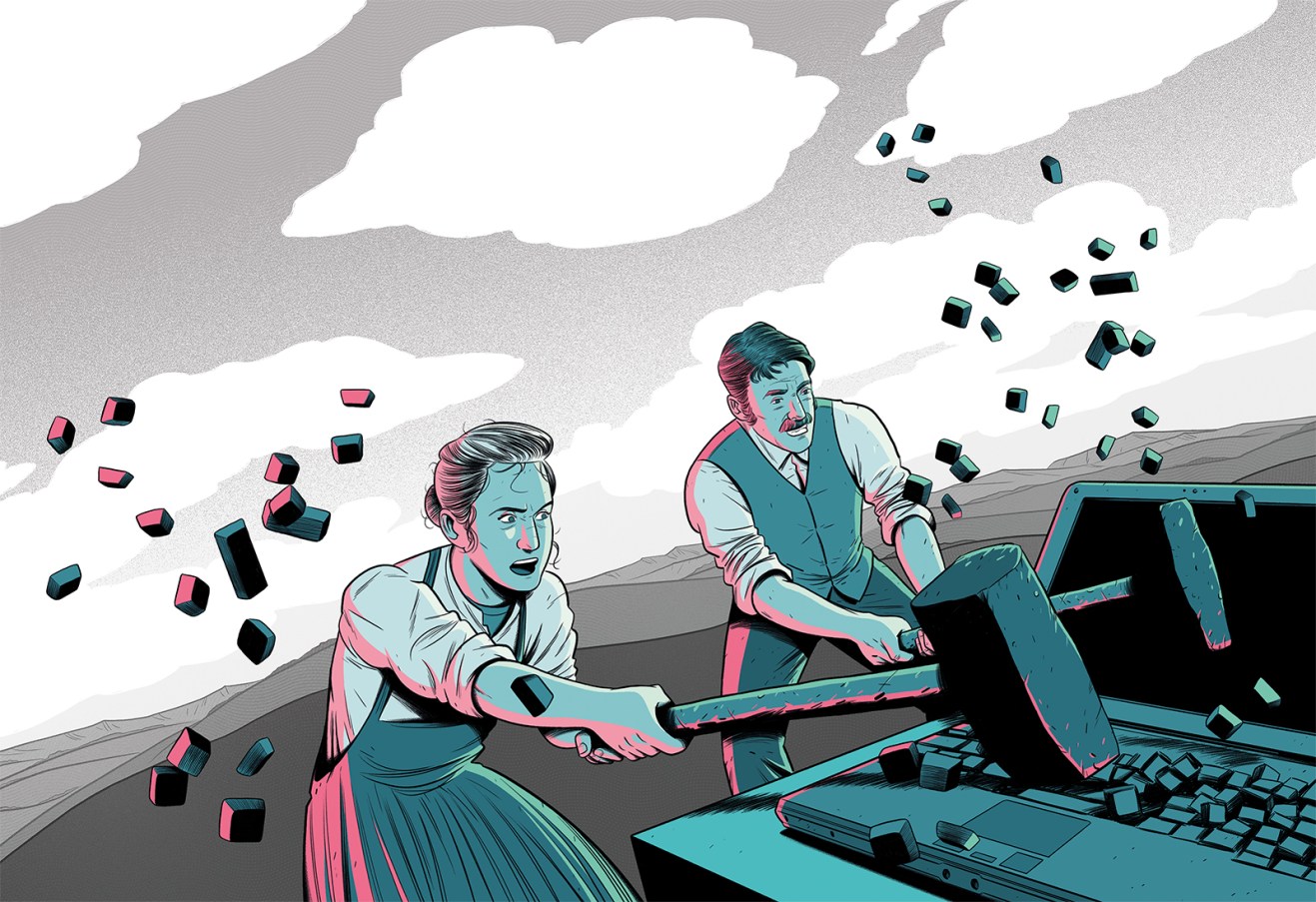
Picture Credit : I'm a Luddite (and So Can You!) | The Nib
Does this sound like a rant by a Luddite? Let’s not forget that the Luddites were portrayed unfairly. Art is one of the few places where timeless questions still matter. Who made this? What did it cost them? What did they notice that others missed? What did they refuse? What passed through them before it took on this form?
A machine can generate an image, a song, a paragraph, a video, perhaps soon a whole film that many people will watch without complaint. But it cannot care that it made something. It cannot be haunted by its failures, or return to a scene after ten years because a childhood memory finally brought a “Eureka” moment. It cannot be disgusted, as Miyazaki was, by a simulation that mistakes motion for life.
Disgust, that strong, authentic, human emotion, may be worth holding on to for dear life.
Not because technology must be kept out of art. But art deserves more than smooth imitation. Tools, experimentation, access… yes to all of that. But also memory, responsibility, difficulty, and some basic respect for the people whose work taught the machine what beauty looks like.
The AI can sit in the studio. Heck, it probably already does. But it should not be allowed to pretend it dreamed the place into being.
References: