
Contemporary Artists Blending Physical and Digital Spaces to Make An Impact
Our dystopian world nags at the conscience of contemporary artists. How does one make meaning and seek inspiration from collapsing ecologies, declining species of animal, fruit and flower, while also doom-scrolling in over-crowded concrete monocultures that we call “cities”? The very meaning of being human has evolved into a continuum, an unpredictable becoming.
In the UK large cohorts of international artists are experimenting with immersive storytelling to make people pay attention to disappearing environments and increasingly fragile cultural identities. They are creating cross-border experiences that bridge real and augmented spaces, redefining how humans interact with community, culture, ecology, and history.
The UK has seen a sharp increase in digital art spaces, dating back to one of the first 2D digital immersions in the 1960s, when Gustav Metzger exhibited multisensory projections generated by heat-sensitive liquid crystals¹ to captivate audiences with new technology. He meant to challenge traditional art practices and make positive change², and so he did. Viral digital works from artists like Yayoi Kusama, Antony Gormley and David Hockney³ dominate the digital art world with experimental methods.
Art spaces and museums are epicenters for immersive storytelling and experiential art. Democratic art dialogues emerging in these spaces transcend boundaries of semantics and imagination, reality and art. They can challenge topical systems, speculate futures and recreate eroding histories, reminding us of Leonard Bernstein’s quote that is the foundational thesis of Mumbai’s g5a Warehouse, a multidisciplinary space for experimental arts:
The point is, art never stopped a war and never got anybody a job. That was never its function. Art cannot change events. But it can change people. It can affect people so that they are changed... because people are changed by art – enriched, ennobled, encouraged – they then act in a way that may affect the course of events... by the way they vote, they behave, the way they think.
The ‘Digitalism’ Exhibition in Saatchi Gallery as part of the British Art Fair 2025, was a narratively dense representation of contemporary Indian artists, Aarti Bhalekar, Anushka Khemka, Riya Mahajan, Shruti Nagaraj, and Muhil Venkatesh, who first arrived in London as art students. Their XR and immersive media works at ‘Digitalism’ lie at the intersection of culture-centric and action-oriented experiences for global audiences. Digitalism, a section of the Fair dedicated entirely to digital art, was curated by prominent academic and interdisciplinary artist Rebekah Tolley, featuring 60+ artists working across AI, digital painting, moving image, robotic sculpture, AR and VR. Digitalism was shown on The Fifth Plinth: an initiative inspired by Trafalgar Square's Fourth Plinth.⁴
‘Shroom Room’ is an Augmented Reality (AR) installation designed by Riya Mahajan that transforms physical spaces into a living, breathing digital ecosystem. Audiences witness an otherworldly, bioluminescent fungal forest superimposed onto their real-world surroundings. Drawing on folklore, where mushrooms are seen as gateways to fairyland and hidden worlds, the work invites audiences to look past the mundane and discover the magical, interconnected networks that thrive just beneath the surface. Shroom Room was acquired by Will Ramsay, owner of the British Art Fair and founder of Ramsay Fairs, Affordable Art Fair, Volta, and it now resides at his Scotland property, in the gardens of the Admiral Ramsay Museum. Notably, The Shroom Room became the first artwork ever to be sold via the Meadow⁵ platform. Mahajan is also a Terra Carta Design Lab finalist and Helen Hamlyn Award nominee.
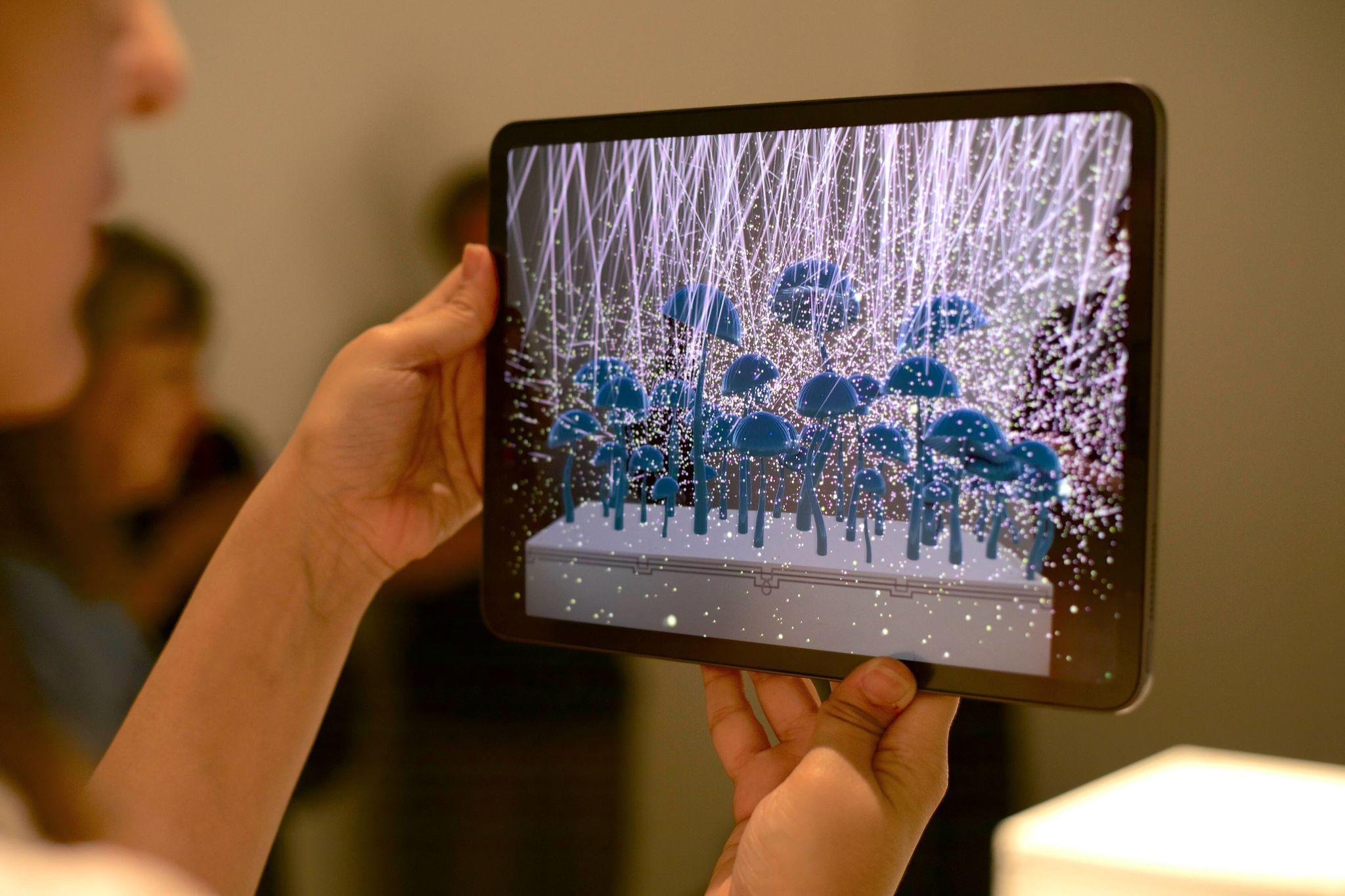
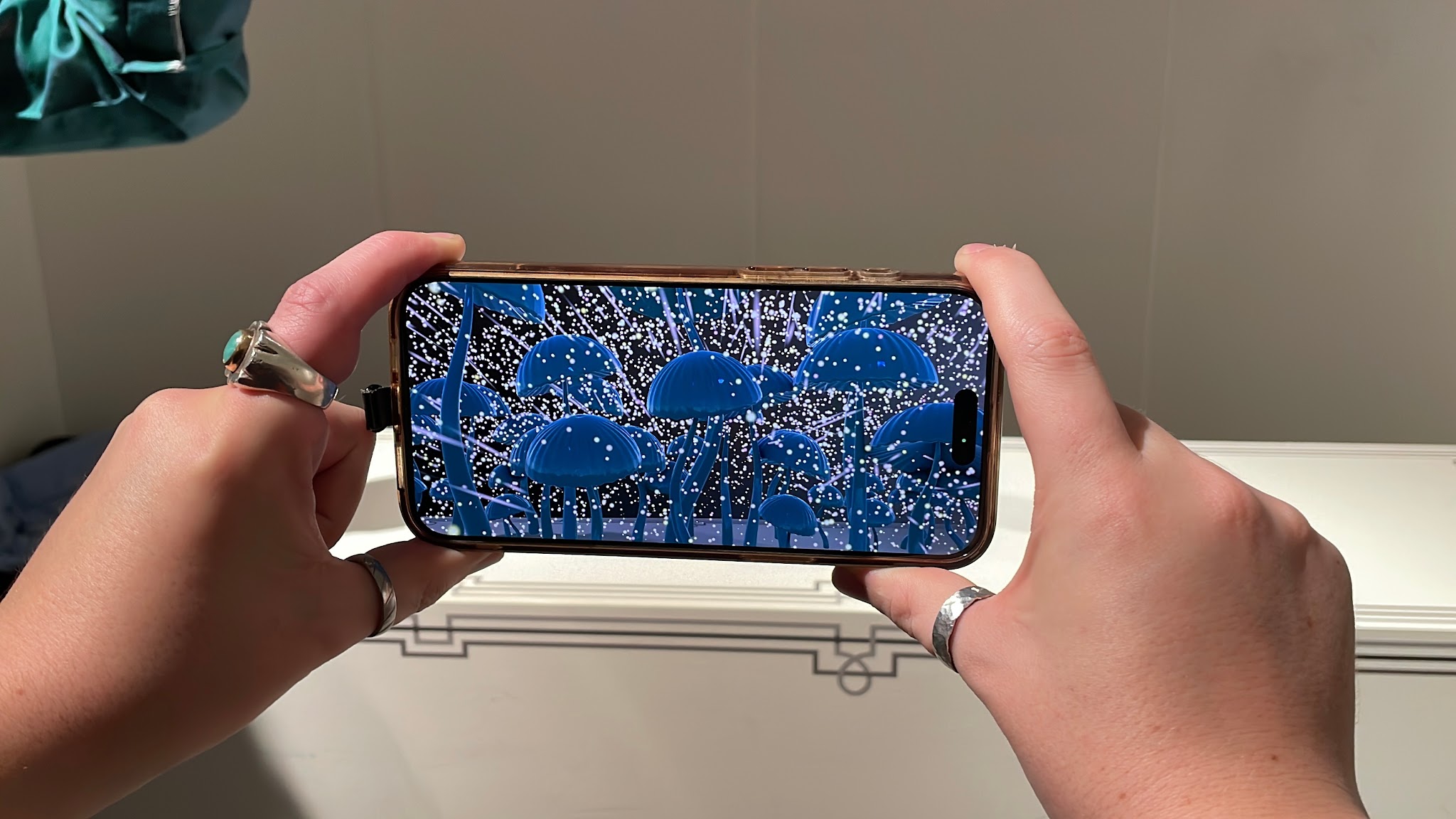
Stills from Shroom Room by Riya Mahajan exhibited at the Saatchi Gallery as part of British Art Fair 2025
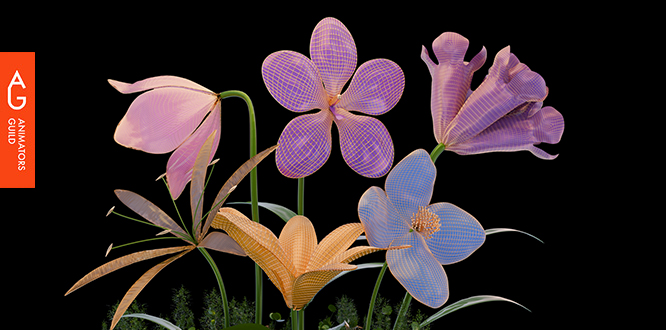
XR and experiential art have the profound ability to alter public perceptions in positive ways, as “AR is described as an inhabited environment in which the physical and the digital ‘co-produce and co-construct one another’⁶,⁷”. ‘Gilded Fractures’ is an augmented reality experience centred on Indian endangered flowers: Blue Vanda Orchid, Crinium Lily, Siroi Lily, Neelakurinji, Yellow Colchicum, and Himalayan Blue Poppy. Users can enter a mystical secret garden where they encounter these endangered species nose-close. All the flowers and surrounding insects are wrapped in golden threads connoting the Japanese concept of kintsugi, and foreshadowing a hopeful healing of the extraordinarily large group of flowering plants, the Angiosperms. The subliminal message underlining the immersive installation with augmented reality is a nurturing reconnection to the aesthetics of the natural world that far outweigh the feelings of helplessness that harrowing statistics represent.
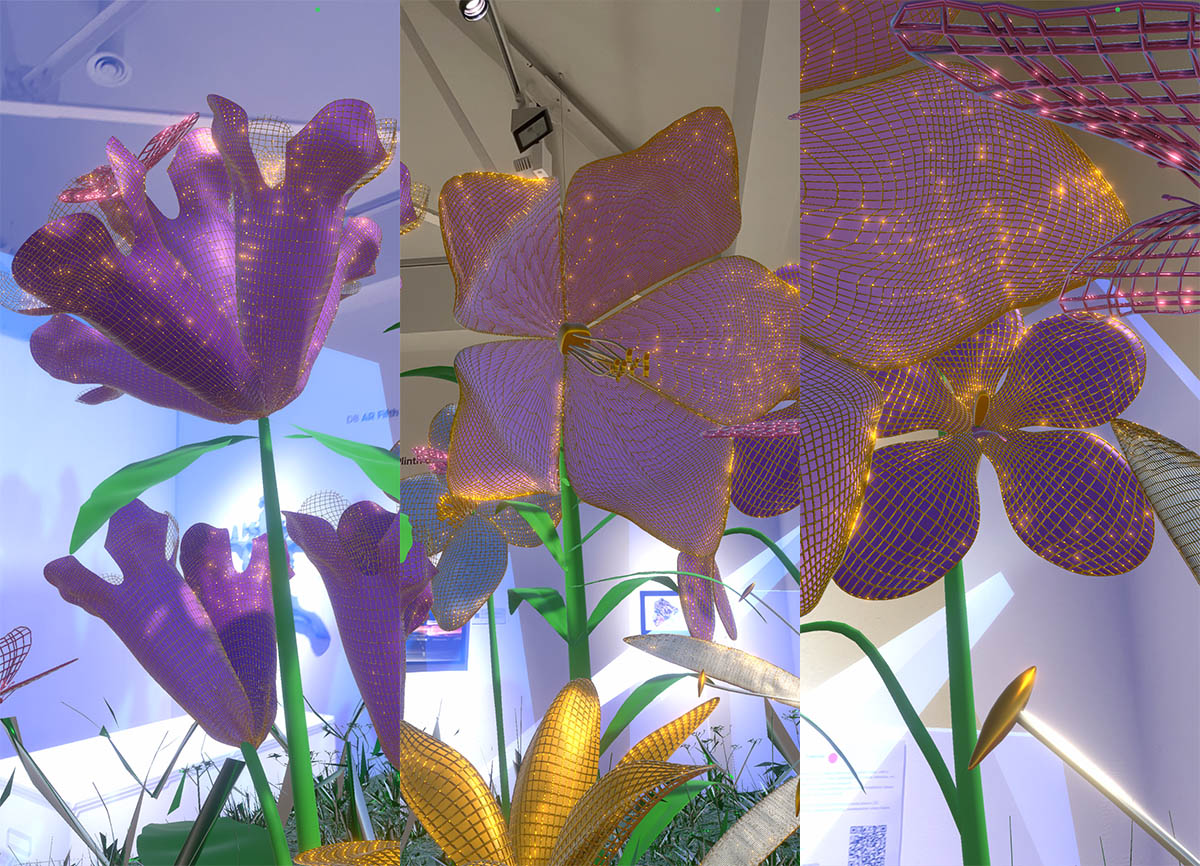
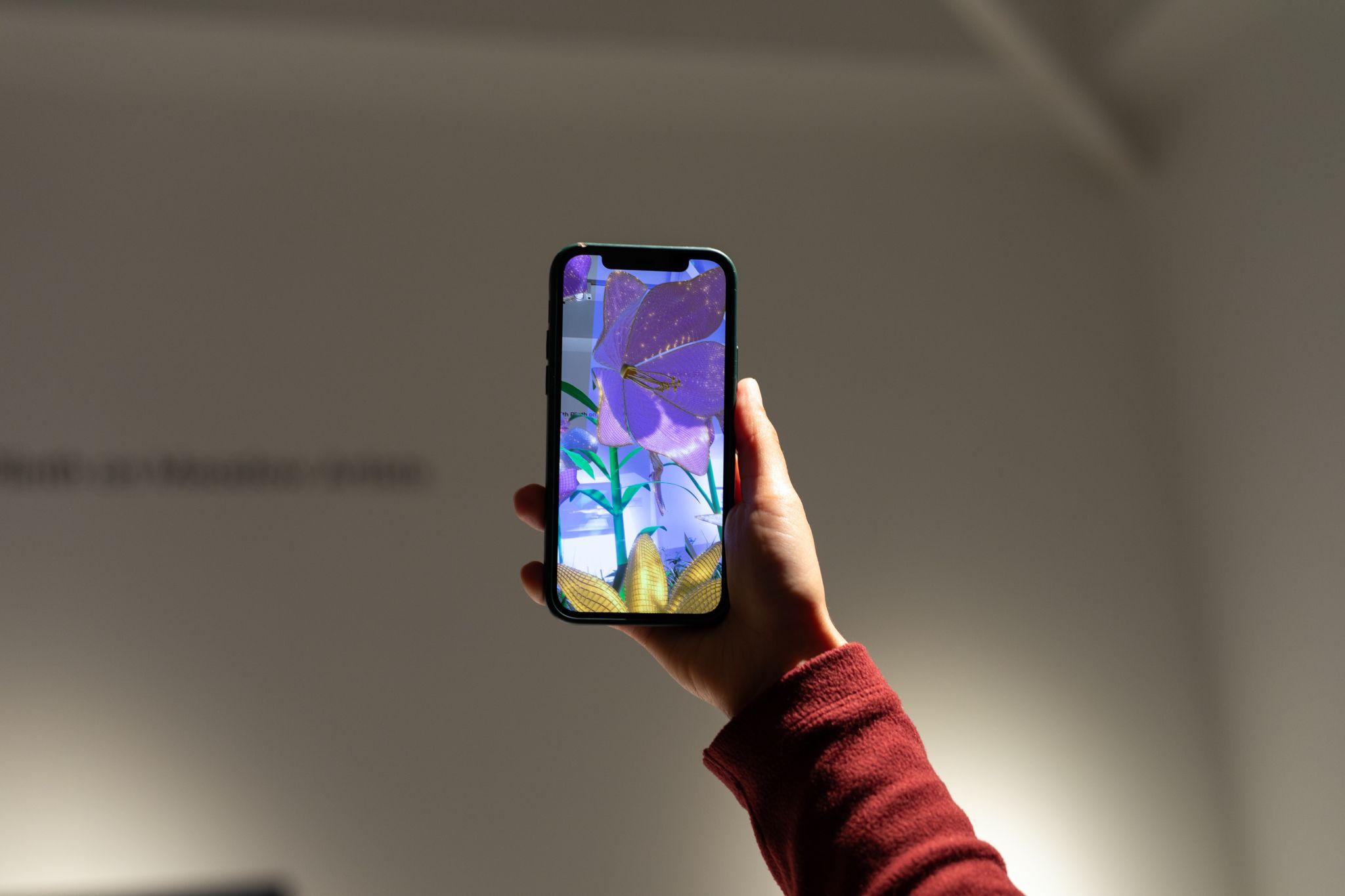
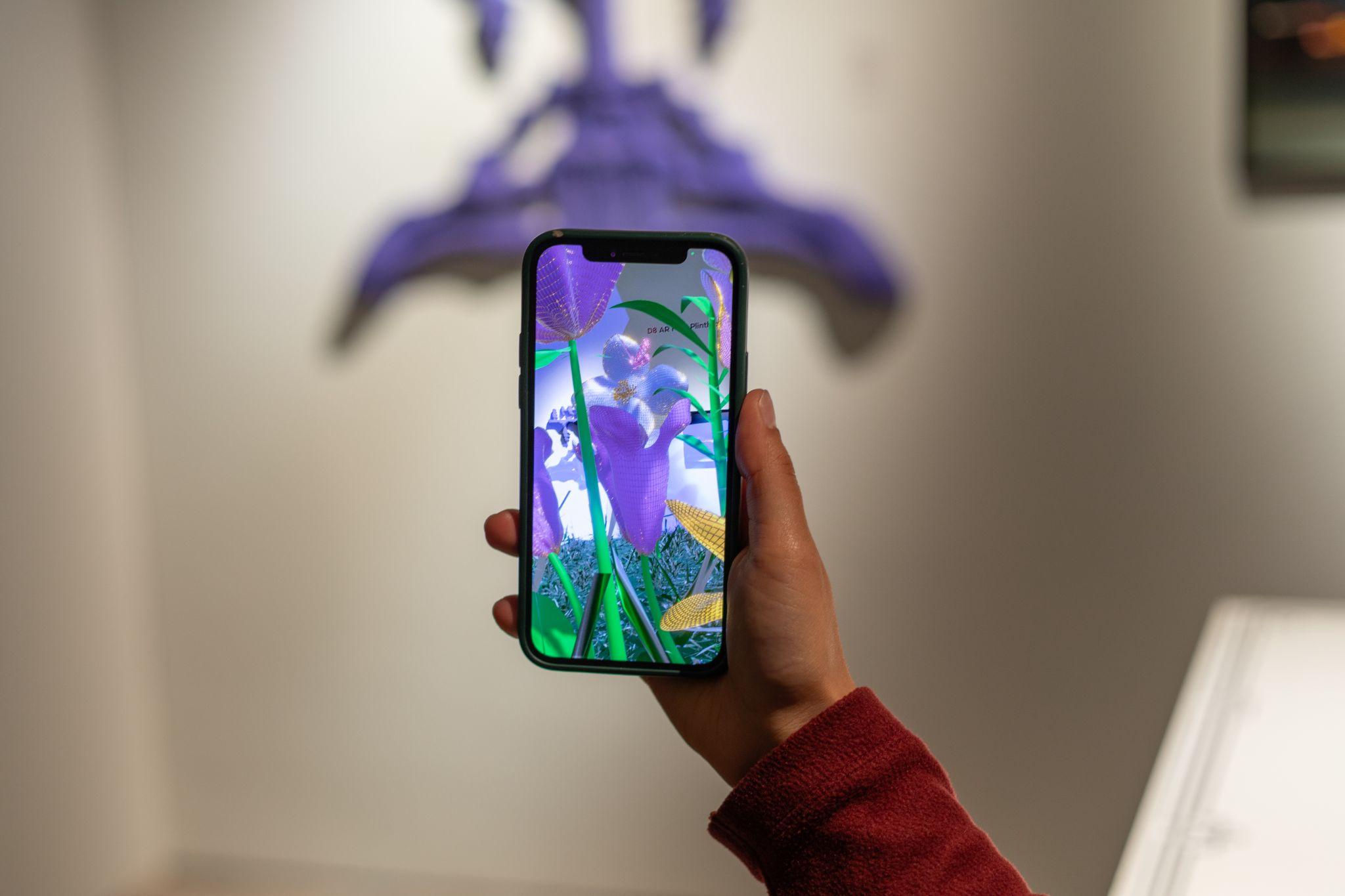
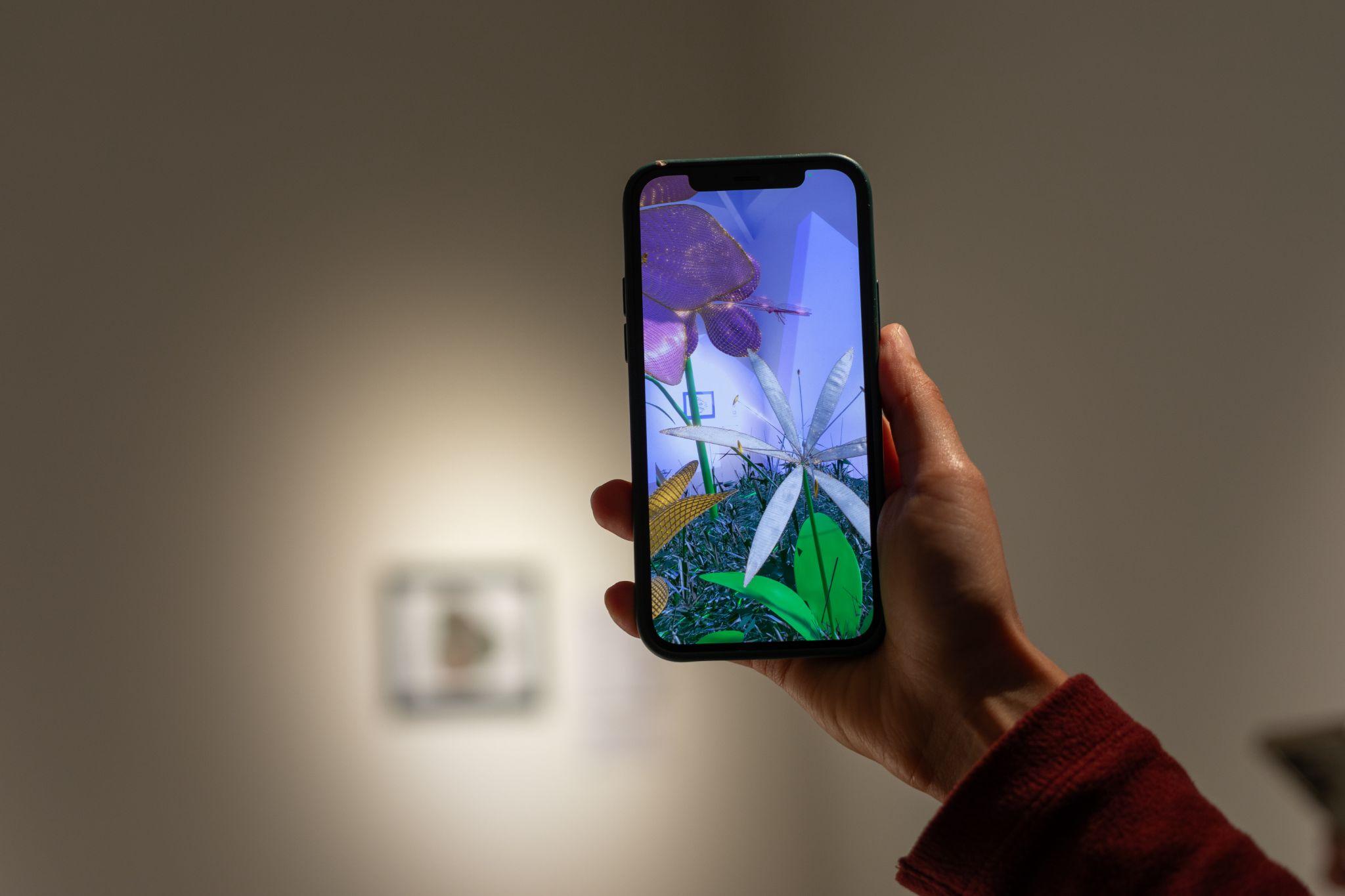
Stills from Gilded Fractures by Aarti Bhalekar exhibited at the Saatchi Gallery as part of British Art Fair 2025
By superimposing digital elements and incorporating vernacular elements, these artists reclaim their personal, place-based narratives in a hyper-urban melting-pot like London to reorient their audiences' perceptions. Shruti Nagaraj’s ‘Maavu (ಮಾವು)’ is an ongoing multimedia archive documenting disappearing regional Indian mango varieties from North Bengaluru, by combining field recordings, interviews, photography, custom typography, immersive soundscapes and 3D photogrammetry.
The immersive, unfiltered, and responsive digital environment amplifies a multicultural exchange of knowledge systems. The audience sensorily experiences the cultural and ecological practices of the communities whose livelihoods depend on the seasonal lifecycles of this emblematic fruit. It also questions the impacts of ecological loss and erosion of collective ancestral meaning seen across farmlands in India. The “living archive” nature of the exhibit catalyses a way for the audience to build deep personal connections to the artwork.
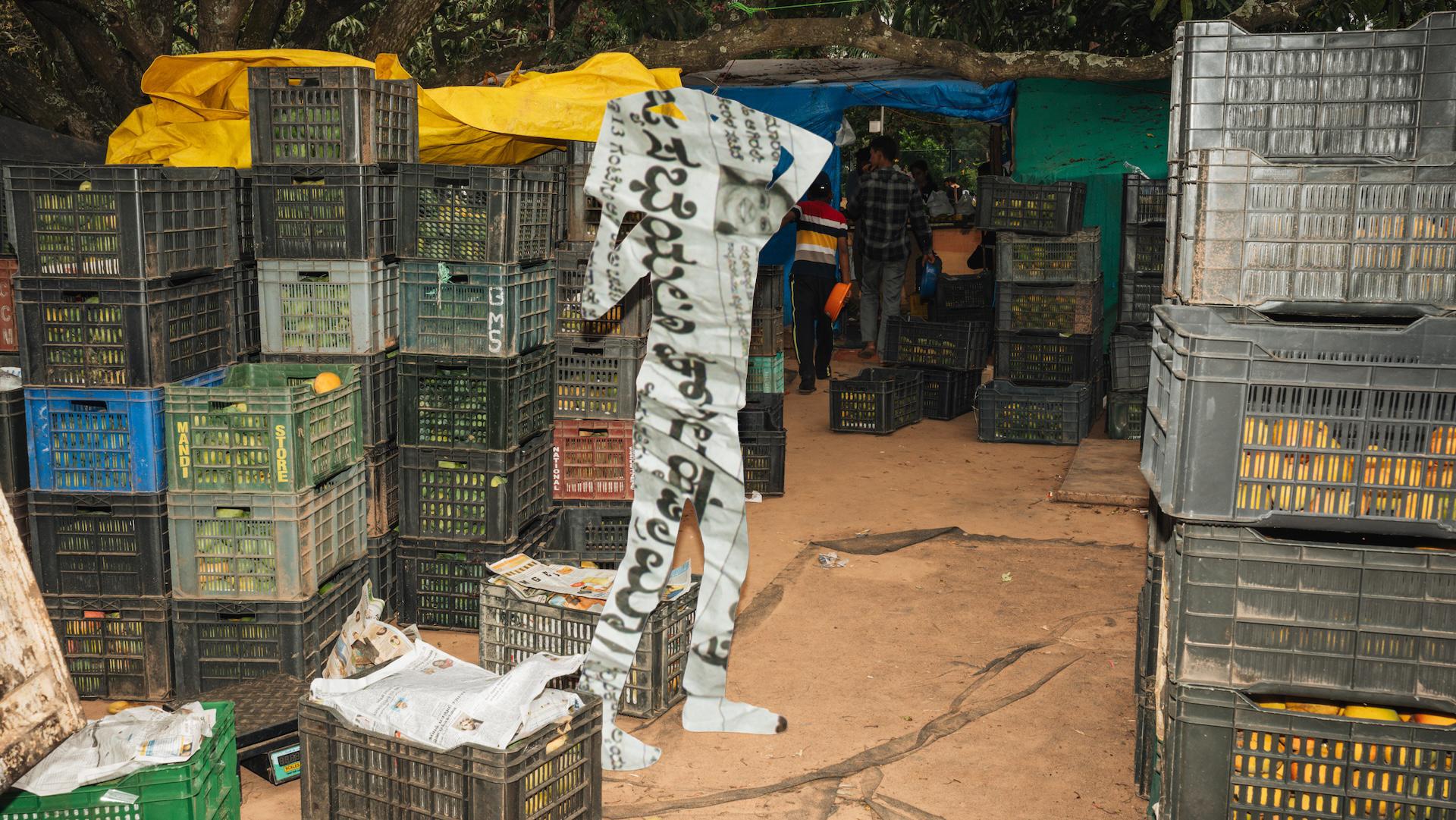
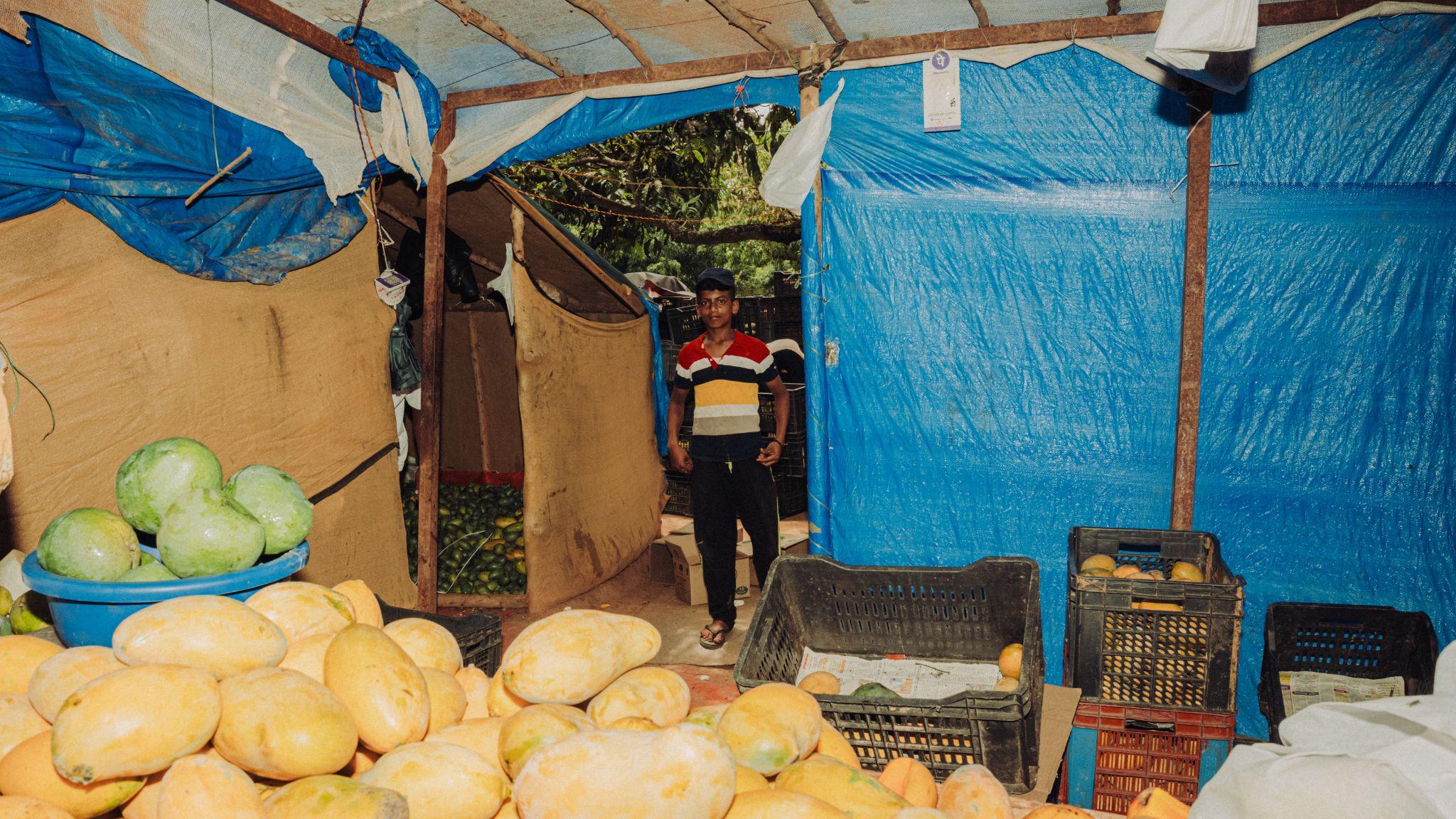
Stills from Maavu by Shruti Nagaraj exhibited at the Saatchi Gallery as part of British Art Fair 2025
In ‘Ancestor’s Cinema’, artists Anushka Khemka and Selin Öztürk ask us, what were the first dreams like? “Ancestor’s Cinema and it invites audiences to enter a [virtual] cave and experience our ancestors' dreams… When you enter the experience, you will see some dreams appear on the wall, and those dreams are about hunting, procreation and actually about everyday life.” Öztürk.
Inspired by Sidarta Ribeiro’s seminal work The Oracle of the Night, the project weaves research with artistic imagination to transport audiences into the world of our prehistoric ancestors - inside the caves where fire, silence, and image shaped the boundaries of consciousness. “It’s reasonable to speculate that there was no clear distinction between dreams and waking life… going to sleep was their way of experiencing something out of reality,” notes Khemka while connoting how the visions we see in the experience would have flickered across the theatre of our ancestors’ minds.
The artists blur the lines of history and speculative imaginations to draw on humanity’s earliest cinema, i.e., dreams.
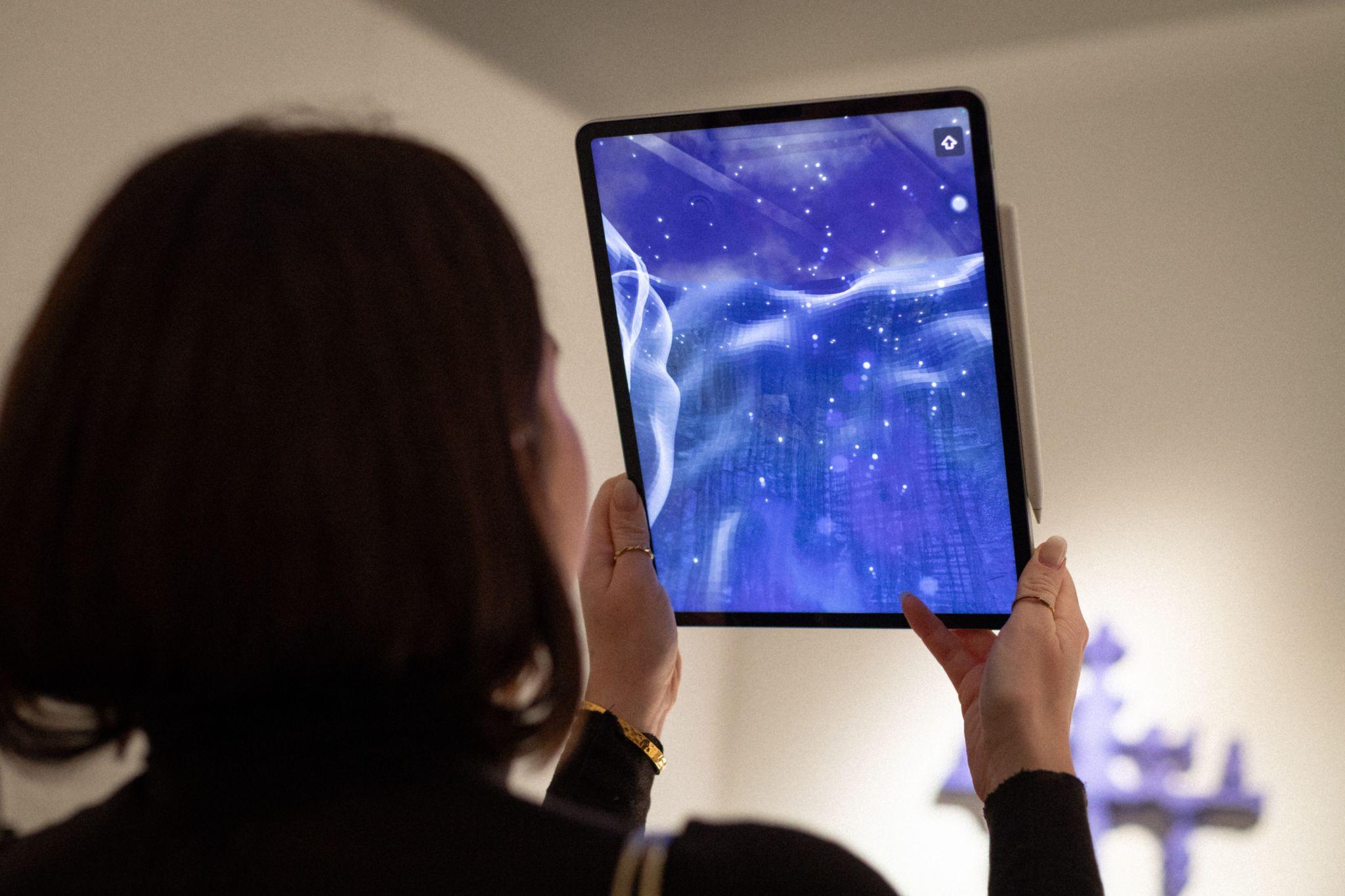
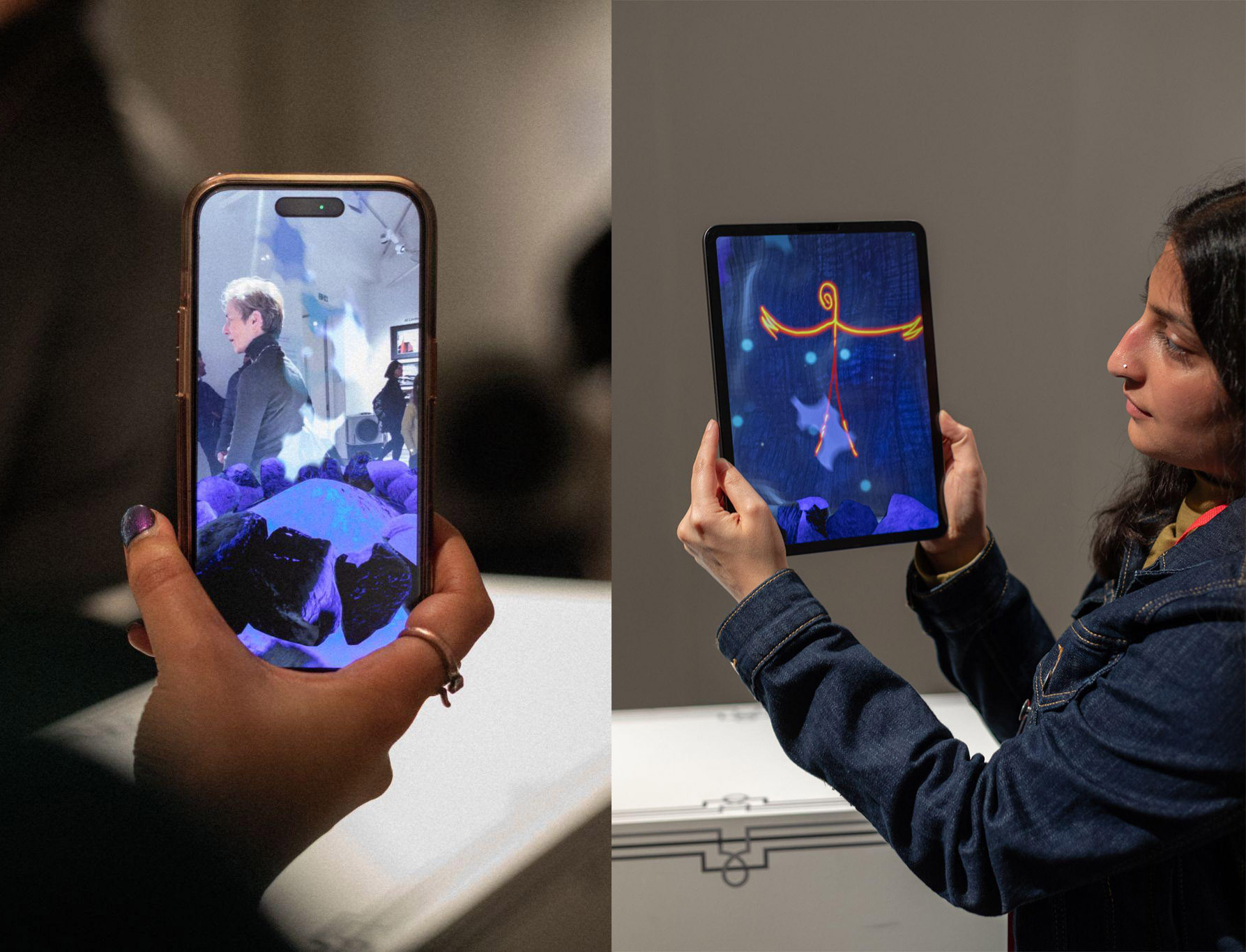
Stills from Ancestors Cinema by Anushka Khemka and Selin Öztürk exhibited at the Saatchi Gallery as part of British Art Fair 2025
Indian cities have tried to mimic Western city plans and architecture, albeit poorly. Connotations of modernism are subconsciously rooted in first world countries, impacting an erasure of community-specific traditions. Muhil Venkatesh’s ‘Neo Tamil Urbanism’ is a reimagination of Madurai, a 6th century BCE city historically celebrated for its trade, literature, art, craft and architecture. Venkatesh’s work is an attempt to find a solution to the question: What if Indian cities remained rooted in their traditional design while meeting the needs of the modern and future world? He explores how traditional Tamil architectural elements such as mandapams, pillars, ponds, gateways, colours and patterns can be adapted for modern urban life. By interacting with city-planning this way, one cannot help but wonder, what aspects of community-centric traditions is my city erasing?
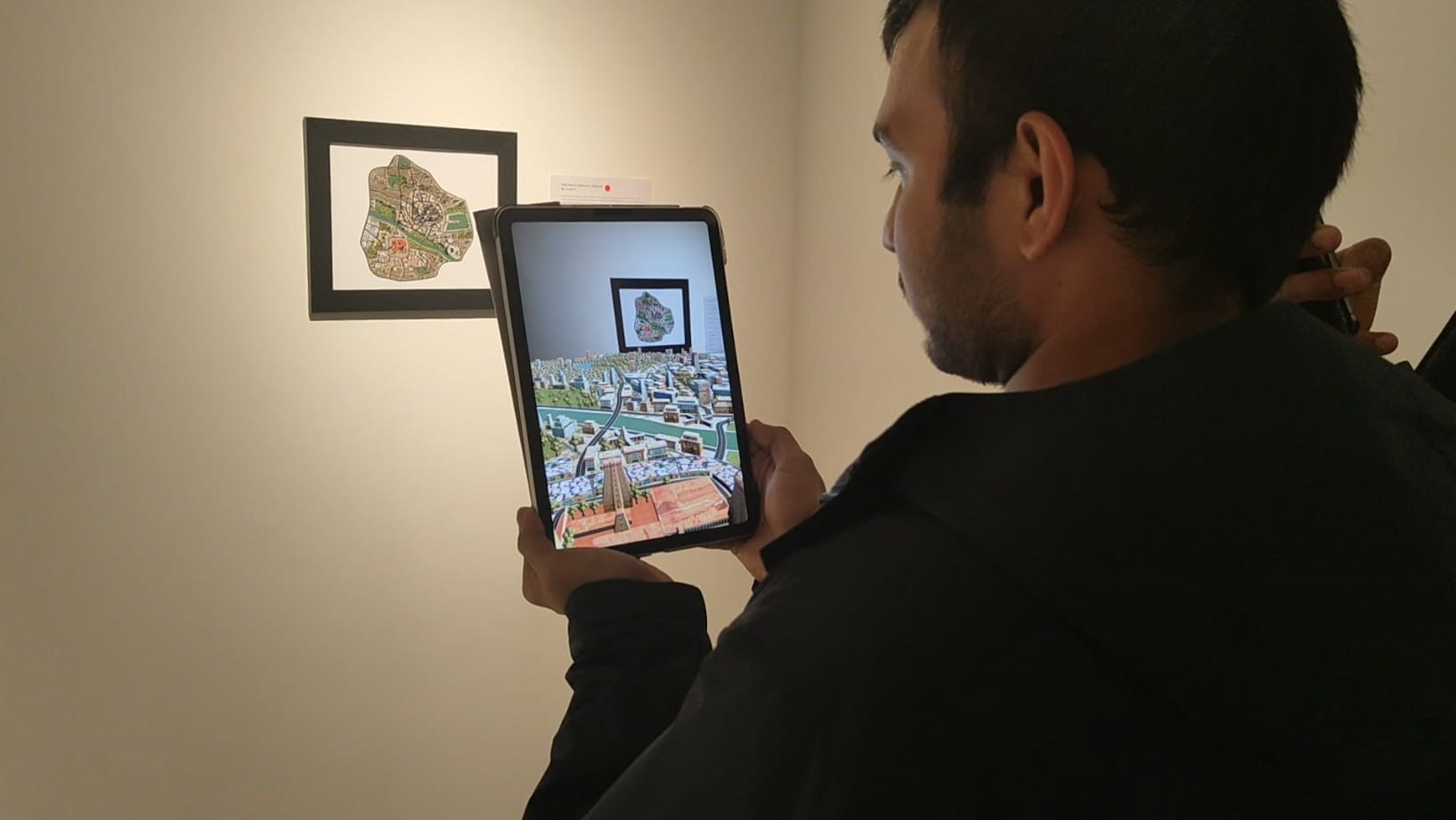
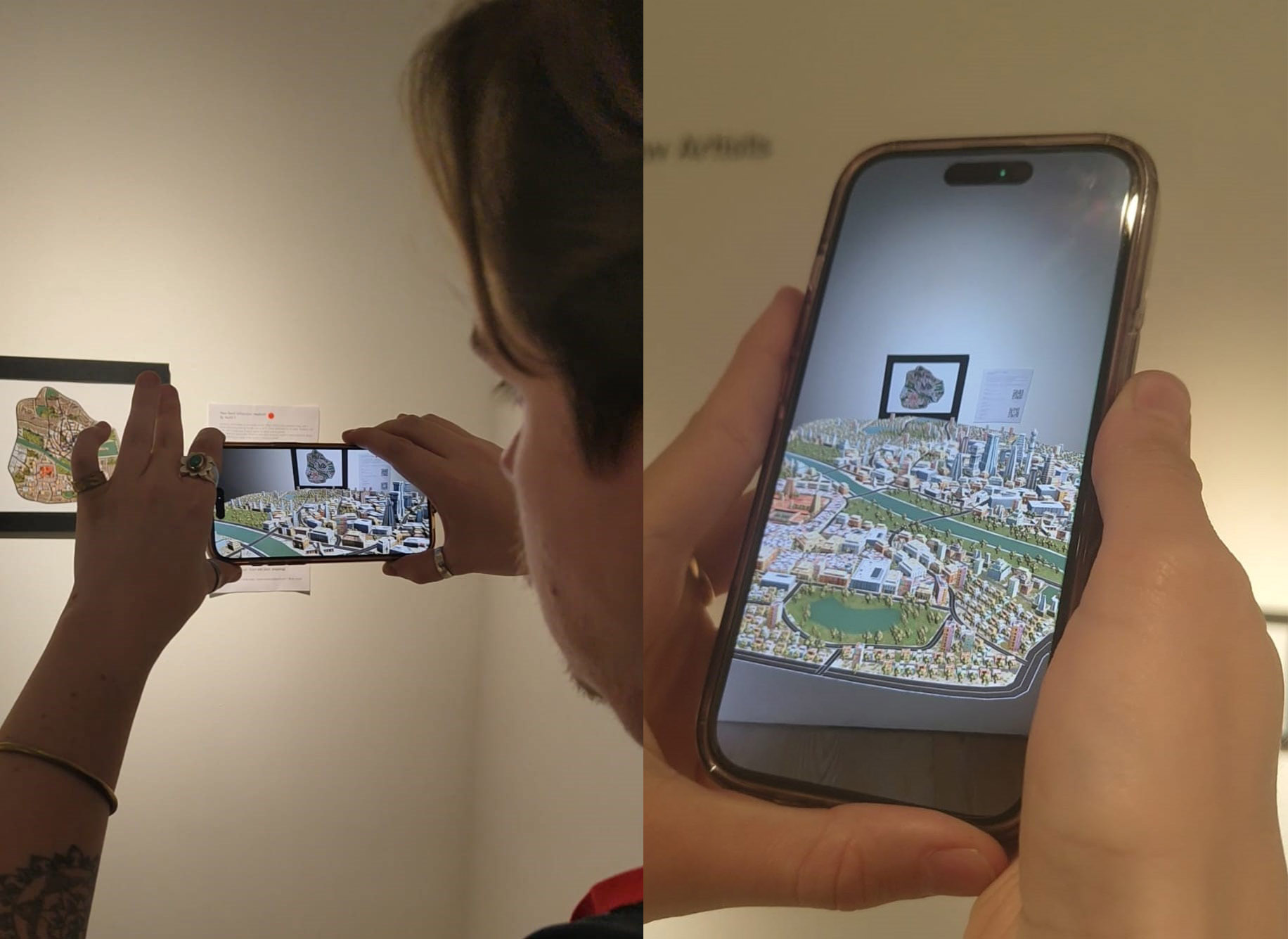
Stills from Neo Tamil Urbanism by Muhil Venkatesh exhibited at the Saatchi Gallery as part of British Art Fair 2025
Immersive media and XR have the ability of going beyond “art for art’s sake” and into the critical flesh of social, political and ecological collapses which have become increasingly common to communities across the world. Artists are using the opportunity to visualise systemic thinking which is an otherwise not-so-possible feature of the traditional art world. By challenging realities, they explicitly give digital art “a point”, a becoming of change.
References:
Artists: