
Drawing The Beautiful Game
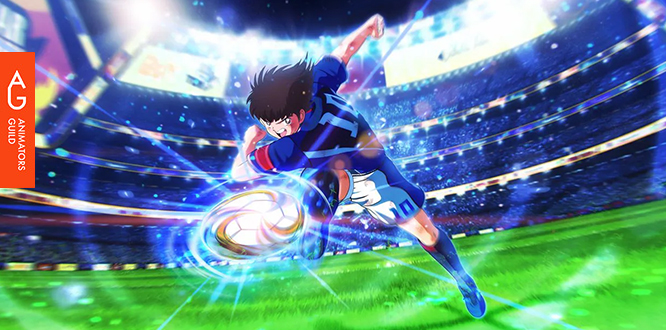
Football Animation's Greatest Hits
The FIFA World Cup 2026 is on. If you didn’t know that, I salute you. Since it’s being held in North America, half the world has rearranged its sleep schedule, and the other half is pretending not to care while checking scores at ungodly times of night. The World Cup is an occasion that often turns reasonable people unreasonable in the best possible way. It’s also fun to get involved in discussing players, results, controversies, and fan culture across online and offline platforms.
It also felt like the perfect time to compile a list of football animation series and films. The beautiful game has given animation some of its most culturally significant work — series that didn't just reflect a love of the sport, but in at least one documented case, actually created it. No other sport has produced anything close to what football has given to animation. Not cricket, not basketball, not baseball. Football and animation have a specific, decades-long relationship that's worth examining, especially now.
So here, with the tournament running: a tour of the most important animated football content ever made. What it is, what it did, and — at the end — an honest question about why India has contributed precisely nothing to this particular tradition.
The One That Started Everything: Captain Tsubasa
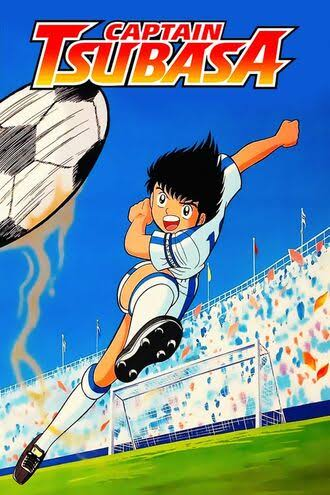
Apologies for interjecting a personal anecdote here. In the UAE in the late 1980s and early 1990s, there was a show called Captain Majid. We’d moved to the country in 1988 so I watched it without understanding a word of Arabic. To be fair, it didn't matter. The football sequences were so dramatic, kinetic, and physically expressive, that the language was irrelevant. I remember holding my breath at every shot, every tackle, enamoured by every moment of despair and elation from the movement alone. So much so that I imitated the moves in school, to many quizzical looks from other kids who had no idea what I was doing randomly kicking the ball ahead of me towards an empty corner of the ground. Or why.
What I was watching, though I didn't know it then, was Captain Tsubasa. Yōichi Takahashi's manga began in Japan in 1981 and was adapted into an anime series in 1983. What happened after that is one of the more remarkable stories in sports and popular culture.
Captain Tsubasa certainly got around — a world phenomenon to rival the World Cup — and in each country, it became something slightly different. In Spain it was Oliver y Benji. In France, Olive et Tom. In Italy, Holly e Benji. In the Arab world, Captain Majid. In Latin America, Supercampeones. Each version localised character names and sometimes dialogue, but the animation was the same, and the response was the same: a generation of children who had never seriously thought about football suddenly wanted to play it.
You’d be stunned to know the list of professional footballers who have publicly credited the series as the reason they took up the sport. Zinedine Zidane. Andrés Iniesta. Alessandro Del Piero. Fernando Torres. Ronaldinho. Neymar. Kylian Mbappé. Thierry Henry. These are not minor figures offering polite tributes to a childhood memory. They are some of the best players in the history of the sport saying, with some seriousness, that a Japanese manga about an impossibly gifted boy and his football shaped their careers.
The Japan story is even more specific. In 1981, when the manga launched, Japan had no professional football league and the sport was a distant second to baseball. The Captain Tsubasa boom among Japanese children through the 1980s directly preceded the formation of the J-League in 1992. The registered number of youth football players in Japan more than doubled during the manga's original serialisation run. A cartoon built a football culture. That is not a small thing.
The franchise has never really stopped. Multiple TV series, four theatrical films, a 2018 reboot timed to the Russia World Cup, and a sequel arc that aired in 2023-24. It is still running. In January 2025, the manga — the original source — became available in English for the first time on Manga Plus. Forty-four years after it began.
The Modern Heir: Blue Lock
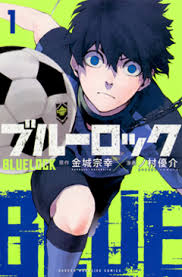
If Captain Tsubasa was built on the idea that a love of football and a pure heart could take you anywhere, Blue Lock is its philosophical opposite.
The premise: after Japan's dismal 2018 World Cup performance, the national football association hires an eccentric coach who believes the problem is that Japanese football is too team-oriented. He locks 300 of the country's best young strikers into a facility and runs a brutal elimination tournament to find the single most selfish, instinctive, ego-driven forward in the country. Players who lose are permanently banned from the national team. Cooperation is almost treated as weakness.
Let’s just say Captain Tsubasa would not be happy about this show’s premise.
Though it should not work as a sports story, it weirdly does. The series, which launched in 2022 and has generated enormous streaming numbers globally on Netflix and Crunchyroll, captures something real about how elite sport actually operates at its highest levels — the individual will that sits underneath team performance, the specific psychology of a striker who has to back himself in the moment when everyone is watching. The animation leans into close-up psychological intensity: expressions, micro-movements, the visual language of someone deciding, in a fraction of a second, to take an impossible shot. A theatrical film (Episode Nagi) followed in 2024, focusing on one of the series' most interesting characters. A third season is in production.
It is darker than anything Captain Tsubasa ever attempted, and deliberately so. The two series are almost a conversation: one about what football can give you if you love it purely, one about what it demands from you if you want to win. And it would be very interesting to ask today’s elite footballers how true the psychology of this show is to reality.
The Realist: Aoashi
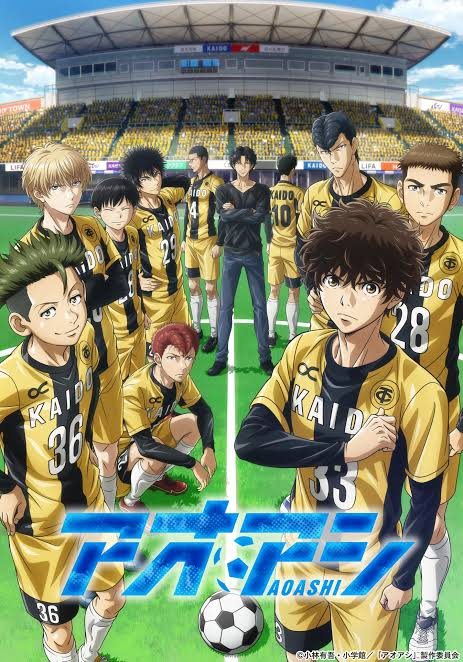
Also released in 2022 — a big year for football animation — Aoashi is the grounded alternative to Blue Lock's high-concept intensity. A talented young player from a small town gets spotted by a professional youth academy and has to learn, from scratch, how a sophisticated tactical system actually works. The part that keeps you watching is in the adjustment the protagonist has to make. What he has to unlearn, what he has to rebuild, how team systems reshape individual instinct. It's a, dare I say it, calmer series, interested in the unglamorous work of becoming good, and it seems to have a devoted following precisely because it doesn't exaggerate.
The Adult One: Giant Killing
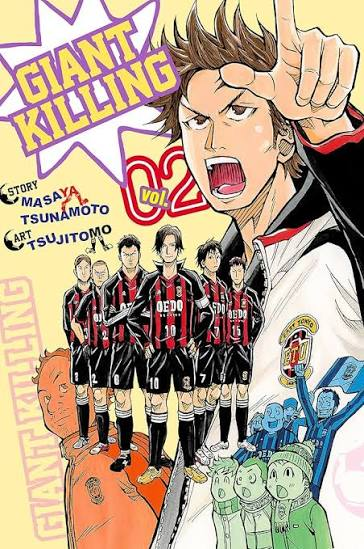
Everything I’ve listed and elaborated upon so far is aimed primarily at younger audiences. Giant Killing is not. Apparently inspired by a true story of Japanese club Tokyo Verdy, It follows a semi-retired former cult hero who takes a job coaching a struggling Japanese club and has to manage everything that comes with it: a fractious board, sceptical veteran players, a fan base that distrusts him, the tactical and psychological work of turning a losing team around.
In other words, it’s a football management story. The animation is understated and the drama is almost entirely internal… conversations, decisions and the slow accumulation of trust. If you've watched football management documentaries and wondered what a thoughtful animated version might look like, this is it.
The Underrated: Galactik Football
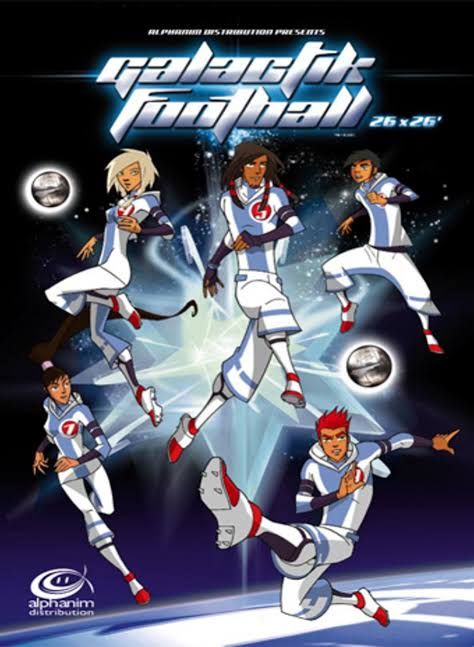
This is a French production from 2006 that probably deserves more recognition than it gets. Set in a futuristic universe where teams from different planets compete in a tournament, each using their own supernatural abilities. The Snow Kids, the series' central team, have to master their particular power while competing against extraterrestrials with very different ones.
It sounds like a children's property, and in some ways it is, but the writing and character dynamics are more sophisticated than the premise suggests. The CGI animation, for 2006, held up reasonably well. It ran to multiple seasons and found a loyal audience in Europe that still talks about it. I thought it was worth mentioning if only because it proves that football, as a narrative vehicle, can be transported into entirely unfamiliar contexts and still function.
The One Actual Film: Metegol
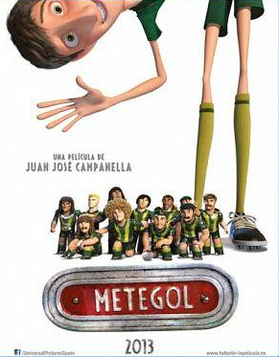
If you want a standalone animated football film rather than a series, the field is quite thin. The one that I should mention is Metegol, an Argentine-Spanish production from 2013 — released internationally as Underdogs in the US and The Unbeatables in the UK.
The premise: a quiet young man who is the town's best table football player is humiliated by a bully who goes on to become a professional star. When the bully returns years later, the table football players literally come to life to help mount a challenge. It's warm, inventive, and rooted in a specifically Latin American relationship to the sport. At the time of release it was the most expensive animated film ever made in Latin America.
And there’s an India connection too, tenuous as it is: Prana Studios in Mumbai handled the lighting, compositing, visual effects, and rendering. Indian hands built a significant portion of what you see on screen in that film.
The Obvious Closing Question
I’ll bet you thought it was “Why is a country with 1.4 billion people not participating in the World Cup?”. To which I say, the story of that enduring self-goal is another matter altogether.
But in the context of this platform, India is one of the largest animation production centres in the world. Behind the behemoth that is cricket, football is the second-most popular sport in the country. The World Cup has always been popular in India, with many fans of Brazil and Argentina, but these days, the sport itself commands attention in a way that was unimaginable two decades ago, thanks to popularity of the Premier League and La Liga, as well as football setups in urban centres.
And yet. There is no Indian animated football series. No Indian animated football film. Not even a notable short. The Wikipedia list of Indian animated films, which runs to hundreds of titles, contains nothing in this category. We have animated mythology, animated comedy, animated superhero properties. No football. I’m frankly astonished that people like Bhaichung Bhutia or Sunil Chhetri don’t even have a rough, animated fan film!
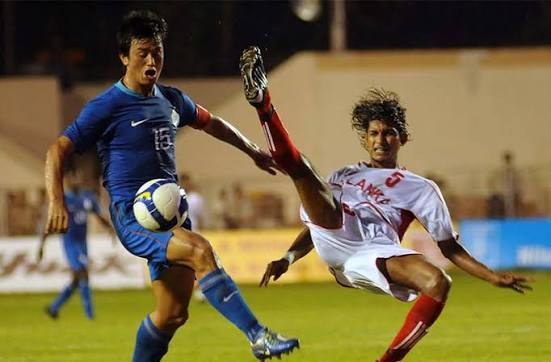
Bhaichung Bhutia (on left)
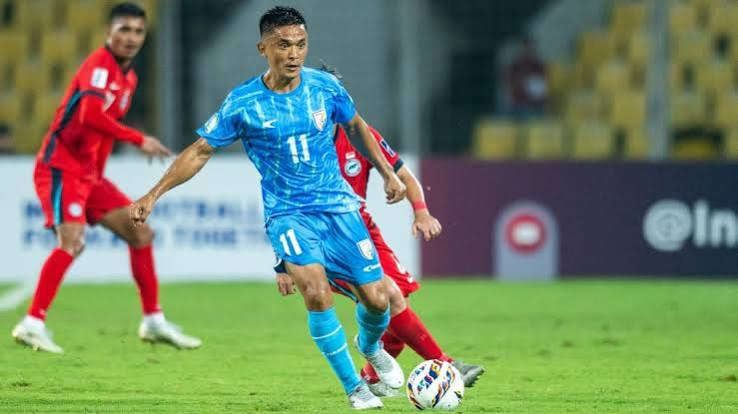
Sunil Chhetri (in foreground)
Captain Tsubasa demonstrated that animation could build a football culture from scratch in a country that didn't have one. Japan in 1981 and India today have quite a bit in common — a country where football exists and is growing, but hasn't yet found its defining story.
Hopefully, someone will make that series soon. Or, realistically, eventually. The template has existed for forty years. The question is just whether it will come from here, or whether Indian audiences will again watch someone else's version of the game and call it their own.
Given the talent in Indian animation, the answer should be obvious. But then, it always has been.
References: