
Design Education Needs To Change. What Shouldn’t?

In September 2025, UK Screen Alliance launched an updated edition of the Core Skills of VFX Handbook, a document intended to help educators understand what aspiring VFX professionals need to know. It was written by Saint John Walker, an educator at the University of Hertfordshire, with input from more than 100 industry contributors. The previous edition had been published in 2017. In the eight years between, enough had changed for the handbook to grow from 70 to 112 pages. The revised edition introduced subjects including real-time VFX using game engines, virtual production, remote working and artificial intelligence. It also placed greater emphasis on the human and collaborative aspects of working in VFX.
The changes were significant enough to warrant a substantial revision of what had already been an industry-informed reference for education. Eight years isn’t particularly long in education. A student entering a four-year design programme in 2017 would have graduated halfway through that period, into a professional environment that was already changing. And while VFX is only one part of the wider design and creative industries, the example raises a pertinent question: how much of what students learn today will remain professionally relevant by the time they graduate?

how much of what students learn today will remain professionally relevant by the time they graduate?
The usual response is that design education needs to keep up with technology. Update curricula, introduce new software, improve industry exposure, and ensure students are ready for employment. None of that is wrong, but it assumes that staying current is primarily a matter of knowing what the industry uses today. There is a difference between preparing someone for their first job and preparing them for a career that might span several decades.
In May 2026, UNESCO published Skills and Employment in the Culture and Creative Industries, examining workforce development across sectors including film, music, fashion and heritage crafts. The report identified educational curricula lagging behind evolving industry requirements, alongside problems involving outdated qualifications, teacher shortages and the often-precarious nature of creative employment. The findings support the need for closer attention to how creative professionals are educated. However, they don’t tell us that the solution is to continuously replace older skills with newer ones.
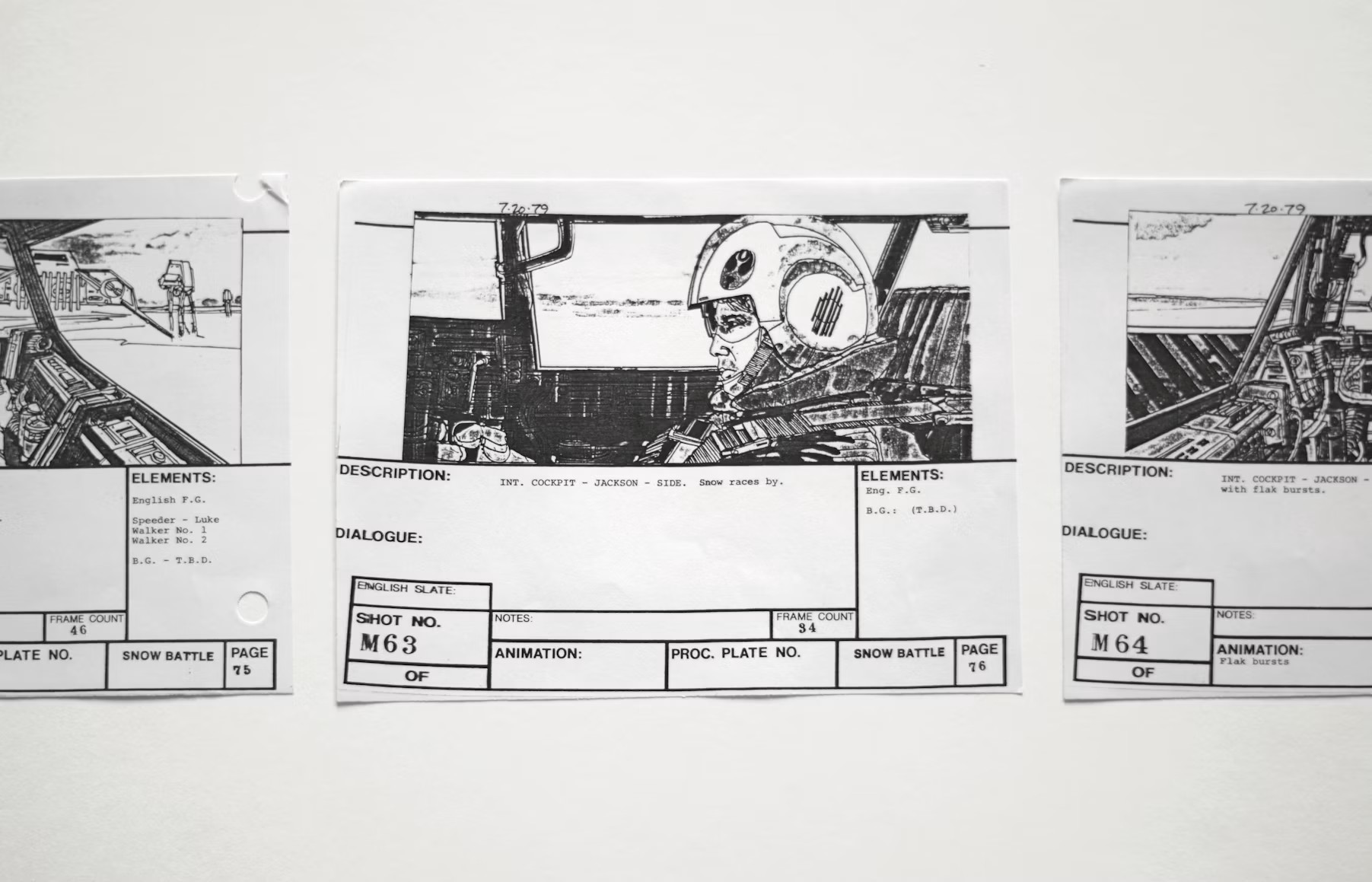
Let’s consider animation. An understanding of timing, spacing, composition, weight, staging and visual storytelling doesn’t become irrelevant when a new application enters the production pipeline. A beautifully rendered character that moves awkwardly, without convincing weight, is still an animation problem, irrespective of the sophistication of the software used to produce it. At the same time, an artist with excellent traditional skills but no understanding of contemporary production workflows may have difficulty contributing to certain kinds of professional projects. Knowing how an animation pipeline functions, how work passes between departments, or how creative decisions affect production schedules is also part of professional competence.
Neither set of abilities cancels out the other. The difficulty lies in determining how much time educational institutions should devote to each, particularly when the available time and resources are finite. The UK’s ScreenSkills organisation worked with Middlesex University and a group of 26 educators and industry professionals to define 16 “work-ready” competencies for educators and employers, grouped as transferable, industry awareness and technical competencies.
ScreenSkills says employers frequently flag these skills as a shortage area among new entrants, and that they can be deprioritised on courses in favour of creative and technical ones. It also publishes guidance on how to teach and evidence them. A student may know how to produce an impressive piece of animation independently, yet be unfamiliar with feedback cycles, production handovers or the compromises required when several artists contribute to the same sequence.

Should education be responsible for preparing graduates for every aspect of professional work?
Employers have a role in training people too. An expectation that graduates should arrive fully prepared for specific production environments risks overlooking the fact that different studios have different workflows, requirements and resources. “Industry-ready” has become an easy phrase to use without saying what it really means.
India’s approach to creative education offers some useful examples of how these competing priorities are being addressed. The National Institute of Design’s Animation Film Design programme describes an educational approach that combines traditional drawing and animation skills with digital techniques. It also draws on Indian storytelling traditions, art, music and sound, with an emphasis on developing original work. It is a curriculum philosophy that acknowledges both artistic foundations and technological practice. The programme description alone cannot tell us how successfully that balance is achieved, but it does demonstrate that traditional and contemporary approaches need not be treated as opposing educational philosophies.
More recently, India established the Indian Institute of Creative Technologies (IICT) as a national centre of excellence for Animation, Visual Effects, Gaming, Comics and Extended Reality (AVGC-XR). A new campus in Mumbai was inaugurated in July 2025, with around 300 students expected in the inaugural batch. In October 2025, IICT, FICCI and Netflix India announced a partnership covering industry-driven curricula, workshops, masterclasses and guest lectures. By March 2026, according to the Ministry of Information and Broadcasting, IICT was operating from its Mumbai campus with 136 students enrolled across 18 courses. One figure is an expectation and the other a count of enrolments to date, so they are not strictly comparable. The government also reported that 15 participants had completed a train-the-trainer initiative.

These developments reflect an increasing emphasis on connecting formal education with professional practice. They also bring us to a larger problem with some familiar claims about design education.
One is that design graduates lack the skills employers need; ScreenSkills reports that employers frequently flag work-ready skills as a shortage area among new entrants. Another is that closer industry involvement will produce better-trained graduates, a premise visible in partnerships like IICT’s with Netflix, whose chief executive said the collaboration bridges academia and industry. And increasingly, a bit of conventional wisdom doing the rounds is that incorporating AI and other emerging technologies into education will improve students’ employment prospects.
All three sound plausible. Elements of the first two are supported by industry concerns and emerging research. But the evidence is not sufficient to treat them as universal truths. For instance, the existence of an industry skills framework demonstrates which abilities participating professionals consider important. It does not establish how many graduates actually lack those abilities, whether the problem is equally prevalent across institutions, or whether a particular educational intervention will improve employment outcomes.
Similarly, industry involvement may create opportunities for students to encounter professional expectations, but its presence alone is not proof of better teaching or more capable graduates. There is also the question of what employers mean when they report a skills shortage. Are applicants missing essential artistic or technical abilities? Do they lack production experience? Is there insufficient training for specialised roles? Or are recruitment difficulties influenced by salaries, working conditions and the availability of experienced professionals?
These possibilities require different responses. Treating them all as failures of education is unlikely to produce useful answers. For India in particular, the available evidence does not justify a sweeping judgement about the quality or professional readiness of animation and design graduates as a whole. That is a reason to examine familiar assumptions more carefully, rather than repeat them until they acquire the status of fact.

Generative AI raises a question about evidence: what does a finished piece of work show about the person who made it?
A study published in Frontiers in Education in October 2026, by Khaled Mostafa Ahmed Mohamed of Ajman University, examined the implications of generative AI for graphic design education. The author used a survey of 270 participants, predominantly undergraduate students, and interviews with 12 academics and practitioners to explore changing competencies and possible curriculum responses.
Among the questions raised was how educational institutions should assess creative judgement when AI can participate directly in producing finished work. The author proposed greater attention to problem formulation, evaluation, authorship and accountability, while acknowledging that the suggested educational framework had not been validated as a causal model. The survey relied on a non-random sample, limiting how widely its findings can be generalised, and the paper does not report where participants were based; the questionnaire and interviews were in Arabic. The research was specific to graphic design and should not be assumed to describe animation education more broadly.
Suppose a student produces a sophisticated visual sequence using generative tools. The result may demonstrate the ability to direct a system towards a particular outcome. But how much does it reveal about the student’s understanding of movement, composition, narrative or design? Can the student say what is wrong with a sequence, explain why one composition communicates more effectively than another, make deliberate changes when the first result fails, or recreate the underlying decisions using a different method? These are questions about competence, and they become particularly important when the visible quality of a finished artefact no longer reliably indicates how much of the work the student performed or understood.

There is no obvious reason to exclude AI tools from creative education simply because they automate certain processes. Automation has been part of digital production for decades. But learning to use a tool and learning to evaluate what it produces are distinct educational tasks. The same distinction applies to conventional software. Students can become extremely proficient at operating an application without necessarily developing a corresponding understanding of design. Equally, a sound understanding of artistic principles doesn’t automatically confer the ability to use professional tools effectively. AI makes the distinction more conspicuous, but it didn’t invent it.
Nor does introducing new technologies into a curriculum end with deciding that students ought to learn them. Someone must teach those subjects, design meaningful exercises, assess the work and understand the limitations of the technologies being introduced.
UNESCO’s 2024 AI Competency Framework for Teachers addresses precisely this challenge. Its 15 competencies cover areas including technical knowledge, ethics, pedagogy and professional development, placing considerable emphasis on educators’ ability to understand and critically assess AI rather than simply use it.
Although the framework is not specific to design education, it highlights a practical issue that applies across disciplines. Updating a syllabus is relatively straightforward compared with ensuring that faculty members have the knowledge, time, equipment and institutional support required to teach it properly. A course can add virtual production to its prospectus, for example, without necessarily possessing the facilities or expertise needed to provide meaningful practical instruction. Similarly, access to AI applications doesn’t automatically equip an educator to teach their technical limitations, ethical implications or appropriate use.

The demand for continuously updated curricula therefore carries obligations involving faculty development and institutional investment. These are less visible than new course announcements, but just as important. If educational institutions devote increasing amounts of time to teaching technologies currently used by industry, what do they make less time for? A degree programme has limits. Adding instruction in new software, production methods or emerging technologies usually requires additional teaching capacity, changes elsewhere in the curriculum, or both.
Should students spend less time drawing from observation? Less time studying film history? Less time developing personal projects? Less time experimenting with techniques that have no immediate commercial application? There may be legitimate reasons to revise the amount of time spent on any of these activities. But the decision shouldn’t be made simply because a particular technology is attracting attention or investment.
While industry requirements do matter, creative education also has responsibilities that extend beyond supplying trained operators for existing production pipelines. Originality, experimentation, the ability to question established approaches, and the development of individual artistic judgement do not always correspond to an employer’s immediate needs. They nevertheless have a place in the education of people who may eventually create work, techniques and businesses that don’t yet exist.
That is where the case for foundational education is strongest: it is what students still have when the methods of production change.
The Core Skills of VFX Handbook will almost certainly require further revision at some point. There will be new technologies to incorporate, established workflows to reconsider and different professional expectations to address. That is precisely what a document concerned with contemporary industry competencies ought to do.

A design education programme has a more complicated responsibility: it must provide students with enough knowledge of contemporary practice to participate meaningfully in the profession, without allowing the demands of the present to consume everything they need for the future.
There is a thrill in learning something new.” — Glen Keane, interviewed by Susan Wloszczyna for The Credits (Motion Picture Association), 2018
A better measure of design education is whether graduates understand their discipline well enough to learn new tools, question how those tools are applied, and recognise when the work demands something else. Technology will continue to change. The question is what an education should leave behind when the technology it taught has moved on.
References