
Usain Bolt Won First Place. Who Came Second?

This piece is about Indian animation. But I have to start with something else.
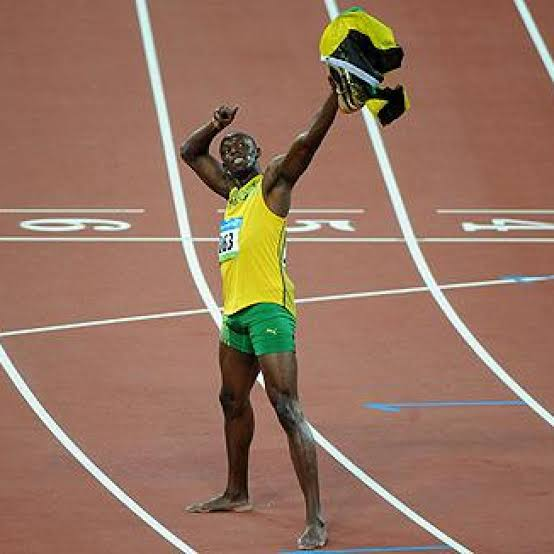
Most of us can say who won gold in the 100m at basically every Olympics in the 2020s. Usain Bolt, obviously. Before him, Michael Johnson. Oddly enough, I couldn't for the life of me name a single silver or bronze medallist from any of those races. Maybe you (a singular reader) can, and if so, well done you, but I’ll bet the average person cannot. Of course, this post isn’t really about athletics. It's about trying to understand memory and wondering why we remember some things and forget others so easily.
I got thinking about all this because someone read an earlier piece I wrote about Indian animation and mythology, and asked, reasonably I suppose, why I hadn't spent more time on the failures. Fair question. I had mentioned the films that flopped after Hanuman — Bal Ganesh, Return of Hanuman and so on — but only as stepping stones on the way to a different point. What actually made me want to write this piece is a follow-up question: why is it so hard to get an original Indian animated film funded in the first place? Turns out those two questions are more tangled together than I expected.
My research started with money matters, and reader, let me warn you, it was already looking quite bleak. India's animation and VFX industry is worth around $1.6 billion, according to Lumikai's 2025 report, which sounds healthy, except roughly 80% of that revenue comes from international outsourcing; animating and rendering other people's IP, for other people's studios, in other countries. Original Indian-owned IP accounts for somewhere between 10 and 15% of the pie, as per a LBBOnline report. And the overall sector isn't even growing right now. The FICCI-EY 2026 report noted a 6% contraction, on top of a 19% decline the year before that, largely because broadcasters like Disney Star and Sony got cautious and pulled back on commissioning.
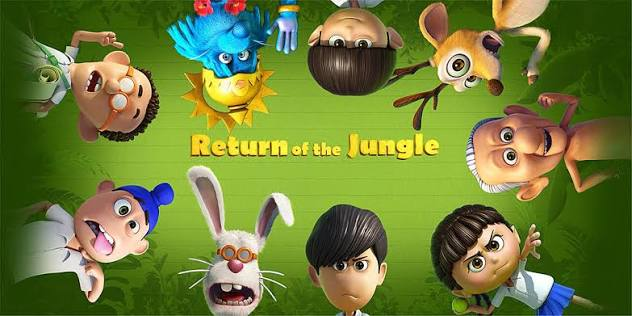
So: an industry that's mostly in the business of animating things it doesn't own, shrinking, with what feels like a sliver left over for the stuff that's actually ours. Vaibhav Kumaresh, whose film Return of the Jungle took fifteen years and his own money to get to a cinema screen, said something in an interview a few months ago that seems pertinent here. Asked why he ended up self-funding the whole thing, he said: "It was a challenge for us to get the sponsors because at the time when we wanted to make a feature film, our Indian animation films were making losses at the box office. So, nobody wanted to fund yet another Indian animation film."
What he’s saying is that nobody wanted to fund yet another Indian animation film, not because the earlier failures were forgotten and funders were blindly optimistic, but because they were remembered, and funders had drawn their lesson from the results. Right or wrong lesson? It’s hard to be definitive here.
However, this isn't quite the same thing as survivorship bias, which is usually about celebrating winners and erasing losers from the record. What Vaibhav is describing is almost the opposite problem: the losers were remembered a little too well, and that did more damage than forgetting would have. In the minds of people who write cheques, a handful of expensive flops became proof that the category doesn't work. We’re aware that one swallow doesn't make a summer, but apparently three or four bad box office numbers can convince an entire industry that a genre is jinxed.
In the interest of research and curiosity, I tried to find the ones that never even got that far, i.e. films that were announced, got some pre-production going, and then just ground to a halt without further ado. No trade press coverage, no "shelved" headline, nothing. And I mostly failed to find them, which is itself a bit of an answer. Dead projects don't leave much of a paper trail and nobody writes a press release announcing that their funding fell through and the film they were excited about last year no longer exists. It just fades away. The silver medallists in the races won by Usain Bolt have a Wikipedia page or a mention. The animated film that breathed its last in a producer's inbox or an accountant’s note in 2016 doesn't even get that.
At least we know about the ones that did get made and then flopped. In fact, the abstract of a 2026 academic paper on Indian animation festival ecosystems seems to suggest almost exactly this point, naming Hanuman (2005), Arjun: The Warrior Prince (2012) and Gitanjali Rao's Bombay Rose (2019) as three films each individually treated, in their moment, as "potential turning points" for the industry, before the same underlying problems reasserted themselves each time: thin institutional support, funders who don't understand what animation actually costs to make, and directors falling back on self-funding because there's no other route. Bombay Rose is a particularly instructive case, actually, because it wasn't even a flop by any reasonable definition. It premiered at Venice, ended up on Netflix, and got real critical attention. And it still didn't seem to unlock easier funding for whatever came next. Which tells me the problem is more about structure than quality.
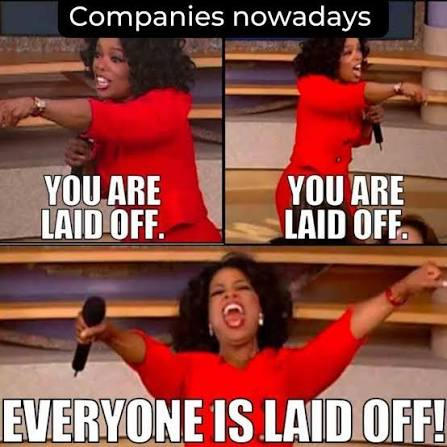
And then, almost to spite the whole argument, there's the thing that happened in February 2025 that I think says more about how fragile all of this is than any Indian original-IP failure could. Technicolor Group, the global parent of Mikros Animation, MPC and The Mill, companies that had actual Oscars on their shelves, filed for court recovery in France after failing to find new investors. The India arm, employing somewhere around 2,700 to 3,200 people across Mumbai and Bengaluru, was shut down within days with no notice. February's salary never got paid. This wasn't an original-IP gamble that didn't pay off, mind you. It was the safe, boring, outsourcing side of the business, i.e. the 80% everyone assumes is the stable bit, collapsing overnight because a company on another continent couldn't raise money. So even the "sensible" choice, the one where you don't take the risk of making your own story, isn't actually safe. It's just a different, less visible kind of risk.
I don't think there's a tidy explanation or fix here, and I'm suspicious of opinion pieces that pretend there is. But I think the Olympics comparison is worth coming back to because we don't remember who Usain Bolt beat. Whereas what's happening in Indian animation funding is almost the inverse; everyone remembers exactly who lost, and has decided that's reason enough not to let anyone else run the race.
References