
The goldfish are innocent.

Devolution from promo to reel & the inherent complications of an attention economy.
I don't mean for this piece to sound like the "angry old man yelling at cloud" meme, and if it does, I apologise. But let me quickly cut to the chase about something; that supposed factoid about goldfish having short memories has been flogged around to kingdom come, but it seems to be BS. I tried researching it both ways, just to be fair - is it true, is it false - and lord help us all, if the "yes it's true" lobby aren't a bit too smug and overconfident for their own good. But that's the way of the world these days. Anyway, how's this remotely connected to animation or videos or anything else in the vicinity? Well, deep breath.
The goldfish thing turns out to matter more than it should, because it's a small, perfect example of a bigger sleight of hand. The moment you dig into it there's no fish study, no measured decline, nothing. It seems to be a stat that got repeated by enough serious-sounding people in enough corporate-sounding decks that it got accepted as gospel truth. Sounds familiar? Welcome to modern times. The eight-second figure came from a 2015 Microsoft Canada report that, when a BBC journalist called Simon Maybin actually checked, cited a source that didn't exist. Not "was outdated." Didn't exist. And by then Time had published it, and half of every marketing conference on earth had put a goldfish clip-art on a slide, and the smug well-actually crowd had a factoid to be smug about. Except they were wrong too. Let me emphasise this again - everyone was/is working off a citation that was never real to begin with.
I bring this up not to score a point about fact-checking, satisfying as that is, but because the goldfish story and the promo-to-reel story are, IMO, the same story wearing two different hoodies.
The honest, actually-measured version of "our attention is changing" comes from a researcher named Gloria Mark at UC Irvine, who has been tracking this properly since 2004. With two decades of longitudinal data, not an infographic. What she's found is that the average time people spend on a single screen before switching to something else has dropped substantially, from about two and a half minutes in 2004 to under a minute now. But please pay attention to what it isn’t. It isn't a claim that our brains have gotten worse at focusing. People still watch entire films. People still binge eight hours of a show in one sitting. What's changed is how often we're offered a way to not do that, and how cheap and easy taking that way is.

Attention has gotten more choosy. And that, I'd argue, is the actual story behind why your ad went from thirty seconds to fifteen. Here's the thing nobody in content and advertising particularly likes to admit: none of this is happening to audiences by accident. It's a business model, and an old one. In 1971, a Nobel-winning economist called Herbert Simon wrote a line that reads like a tweet written yesterday: "a wealth of information creates a poverty of attention." He said this before today’s internet existed. He understood, decades early, that the scarce resource of the future wouldn't be content… we can produce infinite content. It would be the limited number of human hours available to look at any of it.
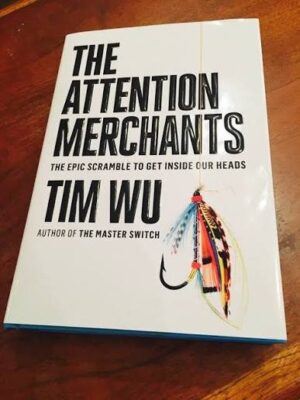
Everything since has more or less been industries figuring out how to compete for that scarcity, and getting steadily better at it. Tim Wu, who wrote a proper history of this called The Attention Merchants, traces the business model back to 1833, to a New York newspaper that sold copies below cost because it had figured out the real product wasn't the paper, but the reader, i.e. you. Or more precisely your eyeballs, which it could then sell to advertisers. Radio picked up the same trick. Television did it bigger. The algorithm does it now with a precision none of its ancestors had, because it can watch, in real time, exactly which fifteen-second video kept you scrolling and which one made you leave, and it adjusts what it shows you next accordingly. Forever, and ever, without getting tired.
That's the terrifying machine your promo is now dropped into these days. Mind you, nobody sat down and decided thirty seconds was too intellectually demanding for modern audiences. I suspect what happened is that the platforms carrying your work started rewarding a completely different unit of content - shorter, cheaper to make, easier to complete - because a completed fifteen-second view is a cleaner data point for the algorithm than an abandoned thirty-second one. The art of making ads, promos or videos didn't shrink because people got dumber or more distracted. It shrunk because it got dropped into an economy with a very specific, very well-documented appetite, and that appetite has nothing to do with storytelling.

There's a bitter little irony sitting right at the heart of this piece, and I will say it out loud rather than pretend it doesn’t exist. Even once you've established all of the above, i.e. even once you know the goldfish stat is fake, even once you know Gloria Mark's actual findings, even once you understand the business model driving the compression - none of that knowledge is going to make the fifteen-second reel go away. Knowing a thing is broken has never, in the history of anything, been sufficient to fix it.
Jonathan Swift worked this out in 1710, writing about political lying of all things: "Falsehood flies, and the Truth comes limping after it." He wasn't being poetic either. He meant it literally; by the time the correction arrives, the lie has already done its work, and nobody particularly cares to update their beliefs after the fact. Three hundred years later, a team at MIT put an actual number on it by tracking how true and false stories moved through Twitter and found that false stories were about 70% more likely to be retweeted than true ones, and reached their first 1,500 people roughly six times faster. It’s not about the lies being more convincing, but more convenient to say and spread, unburdened by the caveats and context that true things tend to drag behind them.
Not that we’re moving away from the promo-to-reel story, mind, because it's the same mechanism in disguise. A fifteen-second reel isn't winning because it's better than a thirty-second film. It's winning because it's less of a burden on the system — cheaper to make, cheaper to finish watching, cheaper for the algorithm to measure and move along. The format that spreads is the one asking the least of everybody downstream of it. Truth loses to falsehood for exactly the reason craft loses to compression: both of them are heavier, and heaviness is the one thing this particular economy has no real intention or way of rewarding.

One more thing. Herbert Simon's original insight assumed something important: that content was expensive to make. Human hours, human labour, a supply that couldn't just be switched on. That assumption is currently falling apart under us. According to a Medium piece, Ahrefs ran an analysis of 900,000 freshly published web pages in April 2025 and found that 74% of them contained AI-generated text. Not "some AI involvement" but predominantly machine written, at a volume nobody was churning out eighteen months earlier. If a wealth of information creates a poverty of attention, and information is about to become close to free to generate in unlimited quantity, the poverty compounds. Whatever pressure has been squeezing the thirty-second spot into fifteen seconds isn't going to ease off, because the thing driving it, an oversupply of content chasing a fixed amount of human attention, is about to get dramatically worse, not better.
I suppose there’s a link here to T20 cricket, but I’m not getting into that.
So no, knowing all this won't put the thirty-second spot back on air. I don't think I wrote all this to pretend otherwise, nor end on some rallying cry about reclaiming craft, because I'm not sure that's honest. What's true is that the compression isn't a mystery. It isn't a generational failing. It isn't proof that audiences got shallow. It's a predictable outcome of a business model that's been running on the same logic since 1833, now operating on machinery precise enough to act on it every seven seconds instead of every morning edition. Understanding that doesn't fix it. But it's more honest than blaming the goldfish.
References